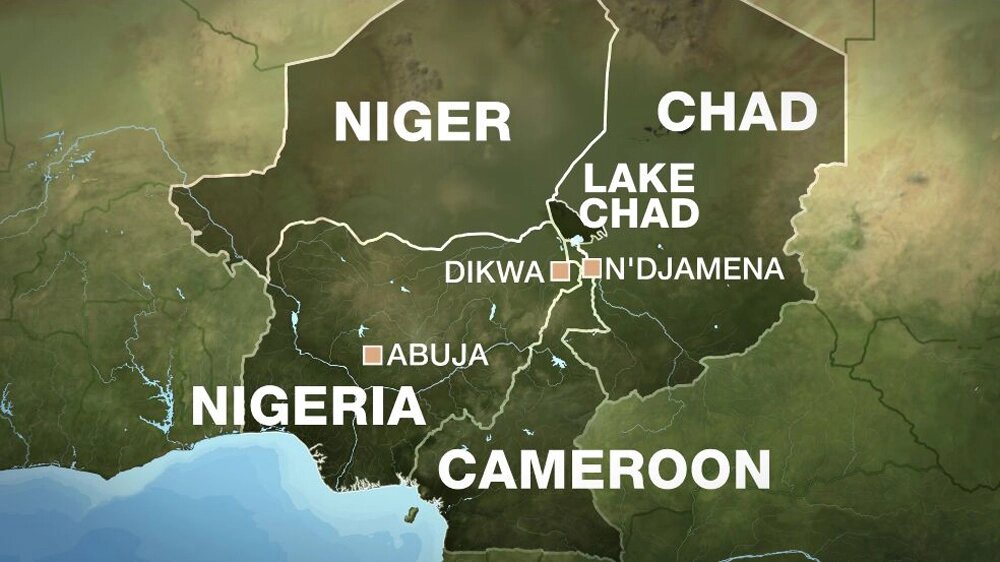
In 2014, the Bring Back Our Girls campaign took over the world as many joined voices to raise awareness of the kidnapping of girls in Northern Nigeria. This campaign also brought the Boko Haram terrorist group to the attention of the world. Various regions in Africa have been through years of conflict and violence that have become protracted crises. In the West-Central Africa region, besides years of civil wars, the Boko Haram sect has been a threat to peace that started in Nigeria and later spread to Cameroun, Chad, and Niger. The group currently poses a major threat to the Lake Chad region which covers all four countries and is one of the bread baskets of the region. The modus operandi of this group was mass killings, kidnappings, and bombing of public places. This posed a challenge to the countries affected, leading to national and regional counter-terrorism structures to collectively fight Boko Haram. In the past five years, Boko Haram has not been prominent in the regional or international media, however, their presence and actions remain a threat to the region and an important crisis to be analyzed.
To understand the crisis, the deprivation theory is used to illustrate the Boko Haram terrorist group Deprivation theory describes how when people are deprived of their basic needs by others in power, they can resort to violence to seek what they need and want. Furthermore, poverty is also one of the leading causes of people resorting to violence and terrorism. This is the cause of various conflicts in the world, especially in Africa. In the case of Nigeria and Chad, poverty, the marginalization of communities, and lack of equal distribution of resources are some of the causes of the rise of Boko Haram. This theory explains the context in which the terrorist group was born and how they have a large following in the areas they operate in.
In multilevel governance, intergovernmentalism, neo-functionalism, and post-functionalism are theories used in this analysis. Intergovernmentalism describes cooperation between states to reach mutual goals and the cooperation of regional bodies to solve challenges. Neofunctionalism argues that countries give authority to regional bodies for policy development and implementation leading to more cooperation at the regional levels. Lastly, Post-functionalism is a theory that argues that for the state to reach integration, they face challenges such as conflicts and frictional belief systems as a result of their national identities. These theories focus on the cooperation aspect of states which is highlighted in this analysis on the regional approach to fighting the terrorist group. Furthermore, it also analyses how national interests also may stand in the way of this cooperation. Within the context of West-Central Africa, the AU, and the G5 Sahel were the main regional bodies involved in the regional approach to the crisis. the AU is a supranational body while the other two are regional involving the countries affected and their neighboring counterparts. Within the framework of regional integration, the AU is a body that aims to promote and increase integrated approaches to African affairs. Members of the AU take the integration further by creating more local bodies created to tackle specific issues. In regards, to anti-terrorism and civilian security, the approach in West Central Africa has been to create regional agreements and joint military task forces to face insurgencies.
Nigeria’s central and northern regions have been experiencing conflicts for decades due to ethnic and religious differences embedded in the politics of the country. Nigeria is home to 213,401,323 people (World Bank, 2021)[1], 49.3% Christians and 48.8% Muslims, and 2% other religions (United States Department of State, 2020). The northern part is mainly populated by Muslims. The origins of conflicts may appear religious; however, it is more concerned with the control of power and government rather than just religion[2]. Boko Haram was born in the town of Maiduguri which was opposed to local governance and created a separatist group that steadily grew and became known within the region. The group started with violent crimes within their community and spread to other Nigerian regions. Their main goal was to eradicate Western education, or any other practices liked to the Western world. Their name is translated as Western culture/education is forbidden/sinful [3](Pichette, 2015). In 2010, Boko Haram began targeting churches, schools, markets, and the police force. They created havoc in northern Nigeria and overpowered the local police force. They were bold in filming the actions and posting them on social media outlets. In the past decades, there have been various factions of Boko Haram that began to operate independently. The most notable is the Islam State West Africa Province (ISWAP) which pledged allegiance to Islamic State in Iraq and Syria (ISIS). These factions are increased their presence and violent attacks in the West-Central Africa region. The kidnapping of the 270 girls in the town of Chibok led to a global media campaign, thus making this group known worldwide.
The Lake Chad basin covers Nigeria, Chad, Cameroun, and Niger. This area has seen various civil and intercommunity conflicts due to its natural resources. In Chad, the Boko Haram violence began in 2015 with attacks in the Lake Chad region. Chad is hosting approximately 20,00 refugees from Nigeria in the Lake Chad region[4]. Following multiple attacks on public spaces, a military base, and villages, a humanitarian crisis erupted leading to large population displacement and the declaration of a state of emergency in the region by the Chadian government. The then-Chadian president made the fight against Boko Haram a priority in his political agenda by establishing a specialized military task force dedicated to eradicating the terrorist group. In 2015, approximately 80,000 people fled their villages in fear of Boko Haram attacks (United Nations, 2015). The government also asked inhabitants of various villages to vacate their villages while the military conducted anti-terrorism operations.
Nigeria and Chad have a similar religious demographic; both are populated by Christians in the South and Muslims in the North. Both countries have also experienced inter-community conflicts related to a lack of resources or inadequate local governance. In these countries, Boko Haram has been able to recruit large numbers of followers. Members of Boko Haram are middle age and young Nigerians who often declared being unemployed and living in poverty, thus the reason they join the group. As mentioned, Boko Haram has its roots in dissatisfaction with local governance. This is in line with the deprivation theory. When frustration with local governance structures meets deeply rooted community issues related to ethnicity and religion, it becomes a breeding ground for violence. This is a good description of the situation in Nigeria and Chad.
The AU, as a supranational organization, mandated its Peace and Security Council (PSC) to support the affected countries in facing terrorist threats. The PSC established the Multinational Joint Task Force (MNJTF) in 2014 with the sole mandate of fighting against Boko Haram. The mandate of the MNJTF is “to create a safe and secure environment in the area affected by the activities of Boko Haram and other terrorist groups[5]”. The joint force launched military operations in the most affected parts of the region with the approval of the AU. Affected member states contributed to military personnel, finances, and in-kind materials to ensure preparedness and emergency responses. In its early days, the MNJTF succeeded in various attacks. In subsequent years, the joint force faced issues raising funding from other resources to continue with its mandate. In the meantime, Boko Haram and other factions such as the ISWAP continued to regroup and exact more violent attacks.
In 2017, five Sahelian countries (Chad, Burkina Faso, Mali, Niger, and Mauritania) came together to create the G5 Sahel. The mandate of the G5 Sahel is to fight against terrorism and the trafficking of humans and drugs within these five countries through cooperation and information sharing. The G5 Sahel was welcomed by the AU and received the support of the United Nations through two resolutions. The group also established a joint task force that took up the fight against Boko Haram just like the MNJTF. Even though Nigeria is not a member and is one of the most affected countries, it has collaborated with other members of the G5 Sahel in the fight.
The regional approaches to the Boko Haram issue in Africa have been swift. The AU has been able to pull countries together in reflecting on means to fight the insurgents and collaborated with the international community such as the European Union (EU) the United States and the military forces of countries such as France. This was done to bring a collaborative approach and further, the integration process that the AU aims for. This process is mapped on paper, however in reality it faces many challenges. The creation of the MNJTF and the G5 Sahel were great steps on paper but lacks collaboration on the ground. Several countries are members of both task forces and therefore find it challenging to respond to the resource demands to achieve their mandates. According to the International Crisis Group (2017), the multiplication of joint forces also leads to the creation of more Boko Haram factions. This increases the insecurity in the regions and requires more manpower and resources to fight them. In this regard, the integrated approach needs to be more coordinated and unified. It is a fact that each affected countries face different challenges due to their geographic location and local governance structures, however, in analyzing these challenges, common grounds can be found to be able to develop integrated approaches. One of the key features of the AU is to set up different task forces to respond to specific crises. With various crises continuously rising there are a multitude of task forces that often compete with other forces established or supported by regional blocks such as the Economic Community of West African States (ECOWAS) and the Economic Community of Central African States (ECCAS). In this regard, the AU is still struggling to effectively integrate the joint task forces the regional blocks, and countries’ approaches to the fight against terrorism. The relations between the affected countries are also facing integration challenges as their interests come into play when they participate in the joint task forces. The integration efforts illustrate the intergovernmentalism and neo-functionalism theories which state the cooperation between states to reach a common goal, in this case, the fight against Boko Haram. On the other hand, these challenges are in agreement with the post-functionalism theory which argues that states face friction when attempting integrated approaches toward solving an issue. To this day, it can be argued that the AU’s efforts have attempted to eradicate Boko Haram but they are still a long way to reaching the level of success needed. According to Bamidele (2017), the AU security mechanism has many fissures and terrorist groups know how to use them to gain advantages and ground. It is fair to say that the AU, the African regional blocks, and the established joint task force need to do some substantial work to mend these fissures, increase cooperation, and build an integrated approach in the fight against Boko Haram.
The current humanitarian crisis and constant population movements illustrate the effects of insecurity in the West-Central African region. Boko Haram is a good example of a challenge that multilevel governance structures face around the world. The AU as a supranational organization, and other African state-led forces show integrated efforts in the attempt to restore security with some measurable effects. However, there is a need for the AU and its counterparts in the continent to build a more efficient and substantial security architecture to face Boko Haram and other threats. This can only be achieved through a more integrated and collaborative approach that takes responds to the individual needs of member states and ensures complementarity.
Deborah Melom Ndjerareou
Picture credit: https://www.aljazeera.com/program/people-power/2015/5/20/chad-at-war-with-boko-haram
[1] https://data.worldbank.org/indicator/SP.POP.TOTL?locations=NG
[2] https://digitalcommons.iwu.edu/cgi/viewcontent.cgi?article=1008&context=gateway
[3] https://digitalcommons.iwu.edu/cgi/viewcontent.cgi?article=1008&context=gateway
 We Write Afrika
Leave a comment