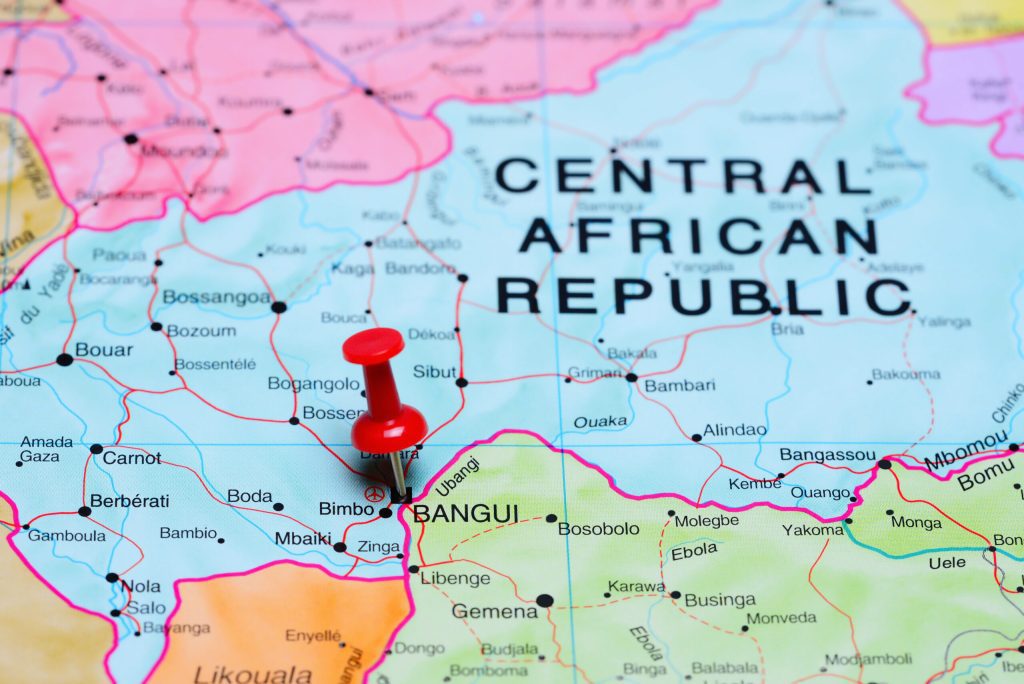
As I reminisce about my life in the Central African Republic; I have two sets of memories. The beautiful filled with friendships, laughter, and community; and the challenging when I went through military coups, fear, and tears.
Part 1: “Bangui la Coquette” – the beautiful
As I read the news today on the Central African Republic (CAR), it brings me back to my childhood in the country and what it represented for me. I moved to Bangui, the capital city of CAR when I was 11 with my parents. My father worked there as a professor and a faculty Dean.
The Bangui I knew is vastly different from what it has become after years of brutal conflict. Bangui was known as “La Coquette” meaning the beautiful. Mine was filled with little adventures and discoveries. I lived on a campus that housed around 800 people from different nationalities. The campus was a global village where three main groups lived peacefully; the children whose lives revolved around school, chores, play, and Sunday school; the fathers who were students, professors, and coaches; and the mothers were the caretakers, students, professors, and teachers.
I was part of the children’s group and enjoyed life on campus with groups of friends. Every day was a new adventure as we wondered what to be up to for the day. I attended a high school about a 20-minute walk from campus and walked to and from Monday to Friday. In the morning, heading to school, we walked in large groups, talked, and laughed until we reached the school’s main gate.
One of my fondest memories of attending the Catholic school St Charles was my love for reading. In the school, I meet Alexia who has been a friend for decades. She always had a book in her hand and was constantly sharing summaries of what she read. Through her, I started going to the Alliance Francaise the French institute in Bangui. The library was a beautiful maze of books. Every weekend I rushed there to find a new reading adventure. Alexia and I often shared stories of what we read during recess in school. We also got into trouble for talking about books in class, especially during math lessons. This was also the era of the Harry Potter series, and we would spend hours discussing the books and memorizing the magical spells. As the new books came out, we anxiously waited for them to be available in CAR for us to read. We lent each other books, enjoyed writing, and would share stories or plays we authored with each other. We bonded over our love of reading and storytelling. Reading has changed the course of my academic and professional life, as I realized much later.
The environment on the campus was jovial and communal. In my household, getting the opportunity to go out into town was one of our favorites. Bangui had an array of shops, markets, Lebanese and French pastry shops. We often drove for a fresh croissant or pain au chocolat in Phoenicia. The shop was always full and filled with chatter, laughter, and the delicious smell of fresh baked goods. On Sundays, after attending church outside of campus, we would take a drive a visit family and friends in different parts of the city. Bangui was a vibrant and colorful city. The main market Km 5 was large and filled with people all day long. All types of food, clothing, and other products were sold there. I often went to the market with my aunt for the monthly grocery supplies. Those trips often lasted a full morning as I watched my aunt bargaining, laughing, and engaging in conversation with the market ladies. She always knew where to go for the best of each item she wanted.
My father bought land in the village of Boboui about 30 km from Bangui. At least twice a month, we would go there for a family outing in nature. The land had fruit trees (mangoes, lemons, papaya, grapefruit, orange) and fields of potatoes, ground nuts, and cassava plants. The village chief at the time was a woman in her late fifties who kept a close eye on the land my father owned. Every trip to Boboui was a full day of discovering agriculture, enjoying green nature, and engaging in enriching conversations with the locals.
The community I grew in opened my mind and heart to the world. I was interacting with children, mothers, and fathers from different countries and was learning from various cultures. On a daily basis, I heard different languages such as Sangho, Lingala, Ngambaye, Malagasy, Dutch, Swahili, English, French, and many more. I can pinpoint my love for cultures, languages, and the world from my childhood in Bangui. The mosaic of people that surrounded me at that age made me realize how big the world was and that there is so much out there to discover.
Part 2: Fear and Resilience
The conflict in CAR is complex with multiple actors in play. In my teen years, I did not have a clear understanding of the complexity; the only part I understood was the danger and the fear. I remember two military coups during which living on the campus we were relatively safe and unharmed until the calm returned.
The third coup was the one where I came face to face with guns and the fear of my life. At the time president Ange-Félix Patassé was in power and was overthrown by François Bozizé with the supposedly help from the Republic of Chad.
We spent weeks hearing about ongoing fighting in different towns in the country. In Bangui, the fear was palpable. Some internationals were being evacuated. On the campus, there was a mixture of truthful information and rumors about rebels coming toward the capital city. In the days leading towards to fall of the city into rebel hands, we were confined within the walls of the campus and praying.
When the fighting started in Bangui, the town was dead still, the only noise was gunshots, and the rebel cars speeding in the streets. Once in a while, we could see from the window, groups of people running and carrying what they could on their heads and backs. Often when gunshots would start, we would watch as they ducked to the side of the road waiting for silence before they continued.
I do not remember the exact moment it started, but it did. The invasion of the campus by armed men who went house to house taking whatever they could carry. It started in the morning around 9 am. Cars with armed men, some of them very young drove into the campus through the main gate. In our house, they arrived, entered the living room, and grabbed the TV, telephone, computer, phones, and any other item laying around. They shouted and yelled in Chadian Arabic, that is how we knew that some of them were from Chad. There were multiple trips to the campus with about an hour or so intervals. After their first arrival, parents on the campus had time to quickly meet up and decide how to deal with the situation. My father left the house and walked to his office which was about 7- 10 minutes’ walk on the other side of the campus.
While he was gone, another picks up truck full of armed men arrived. This time it seems they knew exactly what they were looking for. They didn’t pay any attention to the living room but went straight to the bedrooms to grab things. One of the men asked for water and food, he said something about not having eaten since they entered the county. We gave them bottles of water. Another man asked if we were from Chad we said yes. They asked where the man was who was here before; I believe they were asking for my father. My mother responded that he was not there. I do not know why but I left the house and started running towards my father’s office. I didn’t get too far from the house when two other armed men in the group who were wearing military uniforms yelled at me and told me to go back to the house. One of them gestured towards the house with his hand. I ran back to the house.
About an hour later, two or three cars came back. This time they were not interested in the items in the house; they came to take the cars. They forced entry into the service car parked in front of the house and tried to start it. It was not working so they asked for the key someone in our house gave it to them. In the neighbor’s house in front of our house, they grabbed a bike to take but it didn’t fit in any of the cars. In the house on the left, I could hear that there was an argument between one of the armed men and the neighbors’ teenagers. One of the armed slapped a girl who was trying to step in and end the argument; I started crying. The entire scene was unbearable; I didn’t understand why the campus was under attack. They succeeded in taking three cars with them. For the next few hours, it was very quiet on campus.
In all the houses, besides prayers, people were making phone calls around the world to tell people that we were all in danger on campus. Someone might have called one of their contacts because later on a car with African Union’s armed forces arrived. They were driving slowly by the campus when a bunch of men from inside waved at them to stop and come in. When AU’s armed forces arrived, the men explained what was going on since morning time. They were told that we were on our own, living in fear, and needed help. They spent a few minutes walking around the campus and left without saying much. We never saw them again.
In the evening, it was decided that it was too dangerous for each family to stay in their houses and all the women and children would gather in the large hall and the men would take turns keeping guard. We are also told to take the bare minimum such as clothes and passports with us and to hide other important documents in the house. Most hid their valuables in the ceilings. We were a religious campus with no way of defending ourselves, except for faith and resilience. We all gathered, and the initial fear of the morning began to decrease. Altogether, there were multiple conversations about the events of the day amongst parents and what to do the following days; chatter amongst teenagers and the children began to play their favorite games.
Our strength as a community was apparent. We were together and felt safer. All the men were vigilantes, and a group was always awake throughout the night. We stayed together for over a week while the situation in the city was calming down. My memories of living in Bangui are that of a beautiful country that has fallen into the trap of war. Many lives were taken, destroyed, and uprooted by a series of conflicts that they did not ask for. What I also remember is the resilience of people who continuously face this ongoing conflict while striving to live every day.
In January 2017, I returned to the Central African Republic for a short visit. I had the opportunity to stay at the campus I grew up in and visited the schools I went to. Bangui was still bearing the scars of the war. Many neighborhoods that I knew were partially destroyed. There were military cars all over town. I caught up with my friend Alexia and we spent hours talking about our days in high school, our favorite books, and our friends. While growing up I did not fully understand my surroundings and the conflict. However, as time goes on and I clearly understand and appreciate the resilience and strength that allows people to endure, survive, and continue to strive amid conflict.
Deborah Melom Ndjerareou
 We Write Afrika