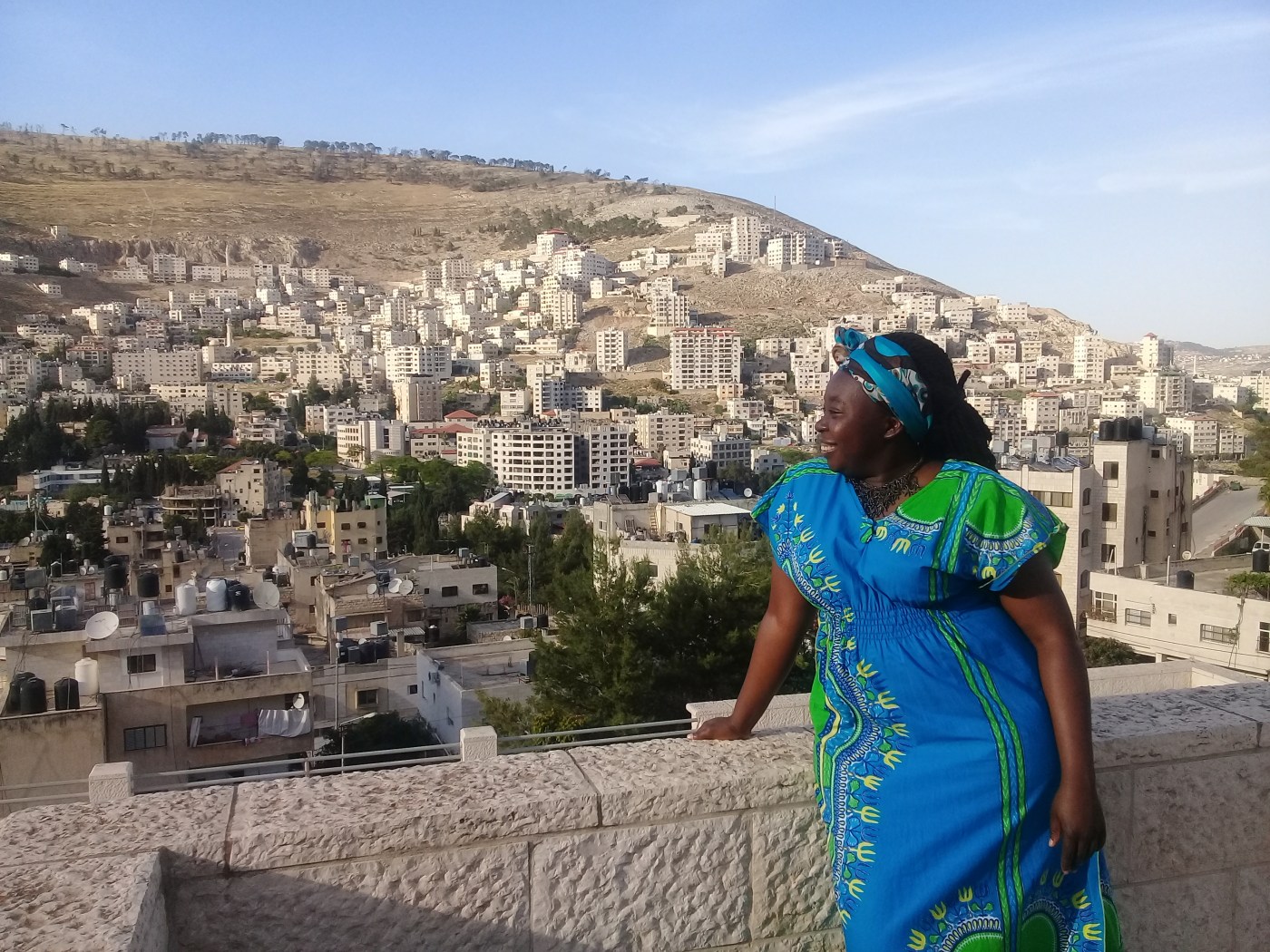
Encountering Humanity in the West Bank.
In 2018, I was sitting in my apartment in Amman Jordan when I received an email with a job offer for a position I had interviewed for weeks before. I was not sure what to expect, I didn’t know much about the Palestinian Territories other than what the media showed. Nonetheless, I was excited to go. I called my dad and told him about the offer, and he didn’t even flinch and said it was a good idea. I was sold and started to prepare for a move to Nablus in the West Bank.
When I was younger, what I knew about the Palestinian territories was seeing young men throwing rocks in the streets. Of course, I didn’t understand anything at the time. Fast forward to my university years, I began watching documentaries on the territories and the ongoing conflict. Many of them drew tears and unanswered questions. I went through my phase of binging these documentaries and learned about the painful, the human, the beautiful, and the hopeful. I remember a clip of a documentary where students at the An Najah National University were being interviewed and they beamed with hope and positivity. This clip also gave me a glimpse of a different image of the territories. In global media, I saw more destruction and at An Najah, the perspective was distinct.
Apart from a limited Google search on what Nablus looked like, I was just ready to go see it for myself and went with the flow. Entering the territories, just felt natural. A wonderful conversation with the cab driver made the drive even more pleasant. I was there working for an organization and served in education programs. I received a great welcome from the team, settled in, and began the journey.
The first two months were getting acquainted with the team and navigating life in Nablus. Going to the shops, visiting sites, and developing my work tasks. The process of discovery was filled with more understanding of the situation, the human cost, and the humanity that keeps people going, and visits to other parts of the West Bank such as Ramallah, Bethlehem, and Jericho. Interacting with Palestinians answered some questions while leaving even more inquiries about what the future could hold.
The human connection – I believe that what makes us feel human is our relations and connections with fellow humans. I always believe that the best part of my world travels is the people I meet and the friends I make. Living in the Palestinian territories, the most positive experience was the people I met, worked with, and shared the guest house with. To this day, I have dear friends from that experience.
Souk – I went to the market every week to shop or more importantly people-watch. The array of fresh food, spices, hand-made olive oil soap, and colorful clothes and crafts were always visually appetizing. I discovered food items like Zaatar, a mixture of ground sumac, sesame seeds, and other spices eaten with bread. There was also Knafeh a decadent cheese and syrup dessert that was a must after the shopping rounds. Most trips to the market included a pit stop at perfume shops. I loved indulging in hundreds of oil and natural fragrances and chatting with sellers. The market is where one can see the makeup of a community. The hustle and bustle opens a window of seeming calmness. At that moment, for hours, it is all about daily chores, purchasing, eating, and chatting. It’s all about being a human.
Around the table – Food as an integral part of world cultures, has the power to bring people together. I spent many evenings at a kitchen table during dinner with colleagues from all over the world as we dived into our experiences and how they shaped our views in the Palestinian Territories. We all also spent time sharing meals at work and outside with our Palestinian colleagues, sharing stories and perspectives. Talking about the African countries I’ve been to, our culture, norms, and way of life, we found similarities. Building on those created a level of mutual understanding. During a dinner meal at a colleague’s house, we hadMolokiah. A dish made of jute mallow leaves and eaten with rice or bread. That was a subtle yet simple and beautiful connection for me because Molokiah cooked differently is also a staple dish in Chad and other African countries. I had never thought that I would find this dish kilometers away from home. I enjoyed authentic dishes like Makhlubeh and made it for my family when I went home on leave. Food started conversations, made us go into our vulnerabilities and we shared dreams for the future world we hoped for.
Yara full of life – She must have been 7 years old. She playfully stepped on my shoe and laughed. Ran around came back, stepped on my shoe again, and laughed. She beamed, had so much energy and her contagious smile made me giggle. We played this game around a large hallway for a few minutes. I saw Yara a few times a week for months. In my mind, I named her “Yara full of life”. She was growing up in a struggle, but her child’s spirit of joy was inspiring. She reminded me of children I worked with before in African countries and whose smile is the most memorable part of my field service. In my point of view, Yara was a beacon of hope. She was every child whose future we should aim to protect. Children do not choose to be born where they are, but their innocent soul makes do with what life throws at them.
The pain of humanity
Conflict – My first real-life encounter with conflict was in the Central African Republic (CAR) which I detail in this post. Later on, through my undergraduate studies, I worked on post-genocide literature with the case of Rwanda. During that time I watched the collapse of Libya and the conflict in Syria. My first field job was in a Sudanese refugee camp in Eastern Chad. I then moved to Jordan to work in a Syrian refugee camp. After working in the Palestinian Territories, I served in Somaliland, the Democratic Republic of Congo and Niger. Through these experiences, I had my fair share of seeing and observing the effects of conflict. But I also experienced beautiful human stories from the conflict and post-conflict zones.
Resilience- Spending months with communities living in conflict brings its sets of lessons. It is the people not involved in the disagreement between leaders who are the ones that feel the most impact of that conflict. Watching the effects of conflict, and its toll on human lives and psyche brings out the feeling of compassion. And feeling that’s as far as it can go sometimes. One might not experience conflict like the affected people do, we cannot walk in their shoes. So, when the feeling makes you sad, cry, or upset, can you imagine how the ones living the conflict feel?
Watching the daily resilience of humans in certain conditions can shape one’s views on life and the state of the world. I saw hardship in people’s faces in the Palestinian territories, DRC, Chad, Niger, Somaliland, and many other places. Those same faces also showed how they managed to find joy in daily life. The inspiration drawn from this is unexplainable.
I was there so I can tell the story- traveling the world for work or leisure brings sets of observations and memories forming the basis of stories. These stories are worth writing, telling, and sharing. The best we can do is to tell what we saw and express how it made us feel. This in itself is a contribution to global memory and a reference for future generations.
Deborah Melom Ndjerareou
 We Write Afrika
Leave a comment