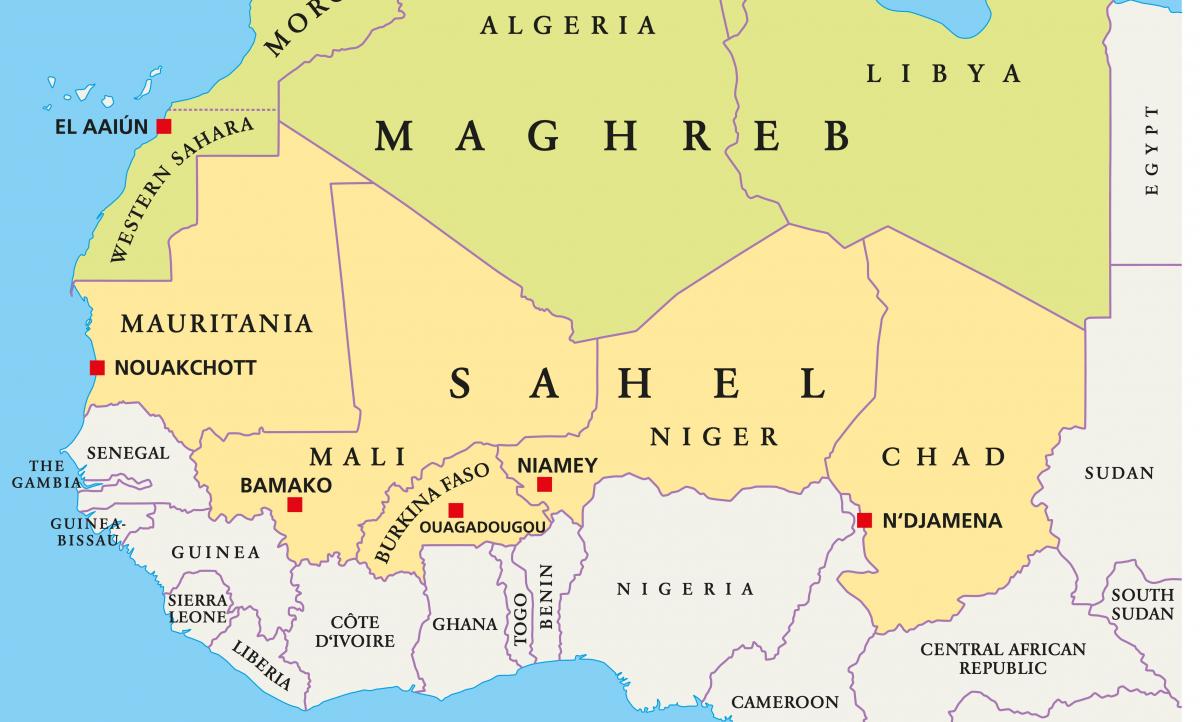
The Sahel region, comprised of countries in the west-central part of Africa, has been at the forefront of African media in the past five years. In this first semester, I published two opinion pieces found here and here and a research paper on the region with a focus on youth political activism. The analysis lies in the recent political and diplomatic reforms being led by a new generation of Sahelians eager to move away from its neo-colonial past. The three most notable are Niger, Mali, and Burkina Faso who are reforming their political and social global partnerships.
The Sahelian countries are former French colonies that gained independence in the 1960’s and since then have kept close ties with their former colonizer who has a strong influence on their political sphere. The region has fallen under the hold of Jihadists and other terror groups causing instability in the region for the past decades. One of the most affected regions is the Liptako-Gourma, also known as the area of three borders, which lies between Niger, Mali, and Burkina Faso. For over a decade, there have been recurring attacks on local populations leading to massive pendulum displacements of populations fleeing their villages often more than once. This dynamic further caused a fragile human, economic, and social context that led to other challenges such as lack of education, malnutrition, and poverty.
Western powers such as France and the United States have kept military bases in these countries and others in the region to assist in combatting jihadism and training local men in uniform. Accords signed with national governments guaranteed the presence of foreign soldiers in the most remote areas. Despite their presence, no noticeable changes in the rampant violence were noticed, especially by local populations and the new generation of Sahelians more involved and vocal about their national politics. Thus began local protests and national coups led by men ready to break a cycle of violence. In all three countries, there were coups with the declaration of new transitional presidents who seemingly have more support from the population than their predecessors. It is also important to note that they are from a younger generation with new and redefined views on politics and diplomacy. These countries went even further in removing themselves from the Economic Community of West African States (ECOWAS) regional block and creating their organization the Alliance of Sahelian States (AES) for regional integration. The presence of foreign powers, most notably France, was no longer welcomed leading to the ending of military and diplomatic partnerships in the AES countries.
We are noticing a regional shift with the power to change the dynamics of the continent. The Sahel is rich in mineral resources and strategically placed geopolitically. It is a cornerstone for the entire upper part of Africa and therefore eyed by the foreign powers. Disrupting the ties with France and the United States in recent months is an occurrence to watch carefully. Just as in the Arab Spring years ago, the youth played a crucial role in the Sahelian shifts. From street protests, activism groups, and social media the youth has voiced its concerns, wants, and needs. They articulated the future they want and the past they would like to leave behind. The separation from France a former colonizer illustrates the colonial and neo-colonial past no longer wanted and the sovereignty dreamed of.
In the age of agitation, the youth of Mali, Niger, and Burkina Faso are showing the world that it is time for renewed global relations with their region based on equality, respect, and mutual benefit. It remains to be seen if other countries in the Sahel will follow suit and join the newly established AES. This is highly probable as countries such as Senegal and Chad have gone through waves of political protests. Senegal for example has a newly elected young president with the discourse of reforms that could fit into the ideology of the AES.
The Sons and Daughters of the Sahel have spoken and are up. The time for reform has arrived with no option of turning back. It is often said that the elders have power, but the youth has the time. The Sahelian youth has that time to work towards changing the status quo and gradually build a sovereign and united Sahel.
Deborah Melom Ndjerareou
 We Write Afrika
Leave a comment