One of my short stories on hair was recently published in the Kalahari Review. In the story, two main characters from different parts of the world are connected by hair. The story came from my reflections on African hair’s depiction in mainstream media and why we must alter it to conform to societal norms.
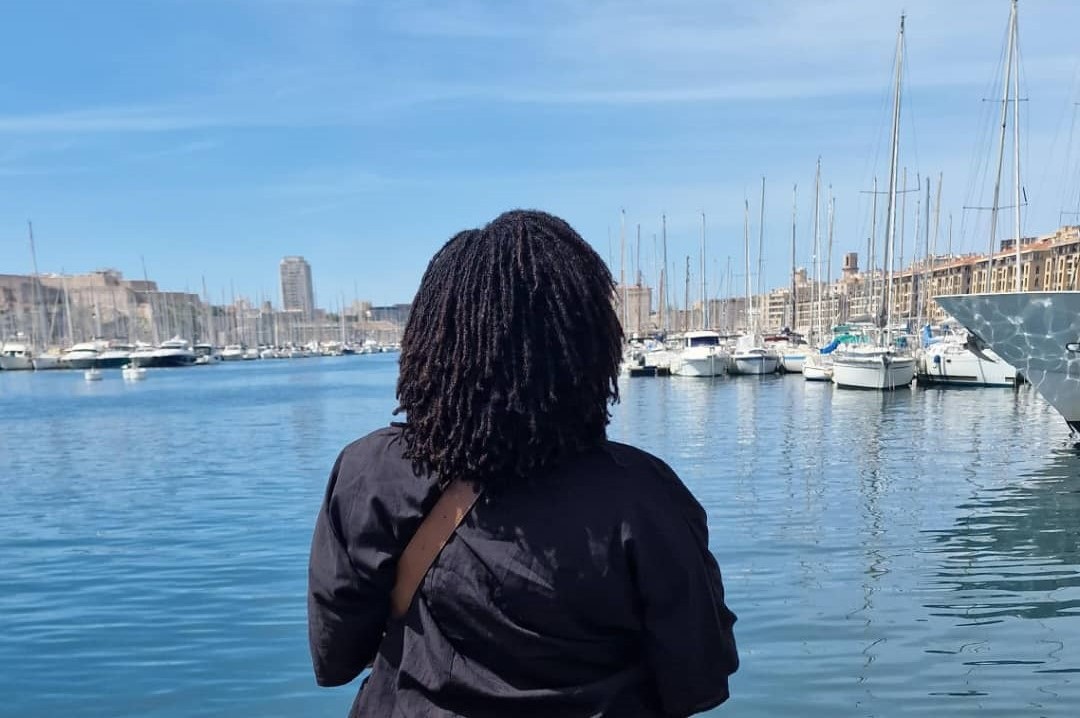
At a young age, I had natural hair that was kinky and full. Getting my hair done was a painful process, and in high school, I started using relaxers regularly to straighten it. I also regularly used hair extensions with braids, twists, and other hairstyles. It was the norm to add synthetic hair to your own because our surroundings told us it was prettier, more manageable, or more acceptable. Only three years ago, I decided to stop using extensions and lock my natural hair. I now let it grow naturally; it was one of my best decisions.
Hair adornment, styles, and weaves have existed for thousands of years. Ancient Egyptian artifacts show that women in power used extensions. In Sub-Saharan Africa, where the hair texture of most of the population is tight curls, maintenance is often the reason for women to use extensions that seem easier to maintain. Others cite using extensions to feel more beautiful. How did shying away from what grows naturally become the norm, and how did the world convince us that straight faux hair was more attractive? Returning to the pre-colonial era of Africa, we find beautiful hairstyles in natural hair. Foreign ideologies introduced the belief that straight, long hair should be the norm.
The world of hair is ever evolving with new products, techniques, and styles. It is also interesting to note that hair is a billion-dollar industry that sells products to maintain it. Take, for example, how human hair extensions, which are at the center of my story, are sold from one continent to another. Women pay high prices to have weaves made with human hair. These prices vary, but they can cost 20-800 USD or more in my country. Each person has their reasons for using these human extensions, but I always wondered (having never used it) how it feels to have someone else’s hair placed on your natural hair.
Today, a growing number of women (and men) are moving away from anything not natural. The Afro hair movement is growing. It started mainly with African Americans and pockets of communities within the continent advocating for women to stay true to their natural locks and embrace them. The movement also comes with new techniques for adequately maintaining natural hair. I realized that as a child, the products and styling techniques made the process of getting my hair done painful. For example, in my home, we firmly believed that spraying water on your hair while braiding was not good. However, we realize that spaying water on your hair softens it temporarily and makes it easier to comb and braid. We also used greasy hair products on dry hair, and the lack of moisture made it painful when combed. Now, the norm is to use a creamy product, thus adding moisture to the hair. We are also learning more about how our diet, environment, and life habits affect what our hair looks and feels like.
Women should be free to choose what makes them feel beautiful, whether natural or extensions. However, we must rethink our belief that what grows naturally from our heads is not beautiful, appropriate, or hard to manage. The belief that hair extensions are more beautiful needs to be challenged. This comes with the decolonization of the mind. It is possible to manage natural hair and feel beautiful in it. Natural and extensions should be seen as subjective choices rather than the preference of extensions to the detriment of what is natural.
Deborah M Ndjerareou
 We Write Afrika
Leave a comment