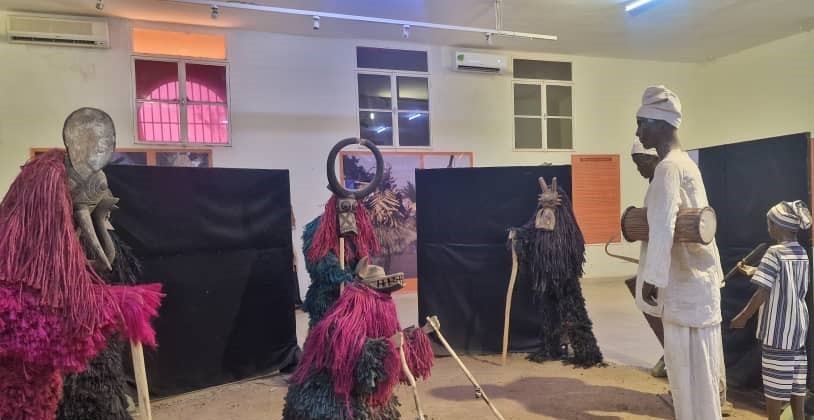
In West Africa, masks hold an essential place in tradition. During ceremonies, whether festive or for mourning, masks appear as part of rituals. There are also yearly mask festivals in countries such as Benin and Côte d’Ivoire. Beyond those rituals, masks are also used to pass down knowledge and wisdom from one generation to another. For example, zoomorphic masks have a meaning related to the animals they represent. During a visit to the national museum in Ouagadougou, Burkina Faso, I delved into the world of those masks to better understand their meanings and how they are used as a tool for learning and keeping tradition.
In West Africa, tribes such as the Nuna, Bobo, and Mossi living in rural areas mimic their natural environment through masks carved with the animals that live in it. Each animal has a specific meaning with educational messages that communities can learn.
A lion represents royalty, strength, and power. A chameleon represents the ability to adapt to situations and cautiousness. A bull also represents power and strength. Each particularity is linked to the behaviour of that animal. A wild guinea fowl’s way of protecting her eggs and young ones represents maternity and childcare. Each type of mask is thoughtfully selected to appear at different gatherings. During a baptism, the wild Guinea fowl can appear to show the importance of child-rearing and maternity. During a funeral, an owl mask appears, which represents a night animal, is linked to death and misfortune. The same owl mask can appear in another ceremony to represent caution and awareness. The owl’s ability to turn its neck about at 270 degrees represents caution and awareness of its surroundings. A life-size exhibition of mask appearances shows an elephant, a hyena, and a bull. All the animals were standing, while the hyena was on its knees. The scene showed that the masks mimicked these animals’ natural behaviour. The stronger stand, while the weakest show fear by kneeling. The guide also explained that they know their space according to the animal kingdom when various masks appear. The strongest have priority.
Zoomorphic masks play an educational role, teaching community members the themes of strength, protection, death, living, and harmony. Lessons and knowledge from natural surroundings are transcribed through these masks, adding theatrical and ludic elements to create stories.
The world of masks is linked with the concept of initiation rites. Only those who have successfully completed such rites can create a mask or even wear one during ceremonies. It is a carefully guarded cultural space reserved for a select few. Masks also have a spiritual function as they are integral to rituals. It can symbolize supernatural forces and participate in incantations and sacrifices, for example, when pleading the gods for a cause in society. One of the masks in the exhibition had different signs representing Islam, Christianity, and Animism. That mask represents the unity of these religions and promotes religious cohabitation in societies.
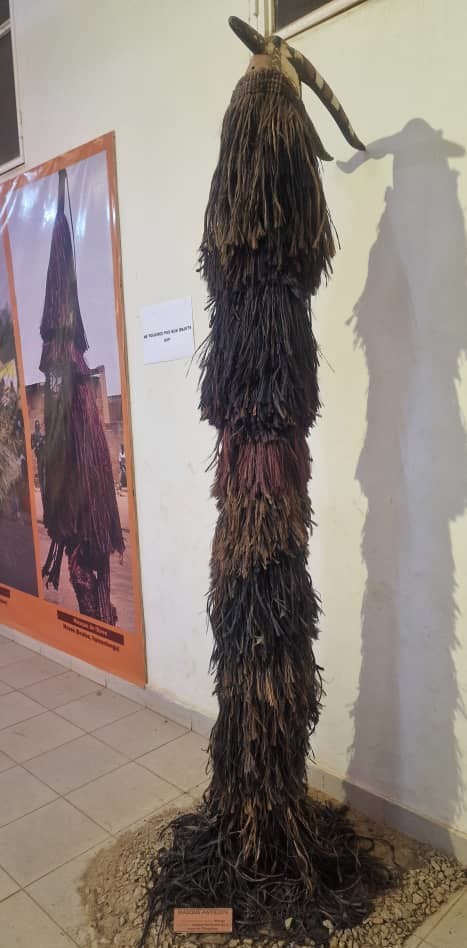
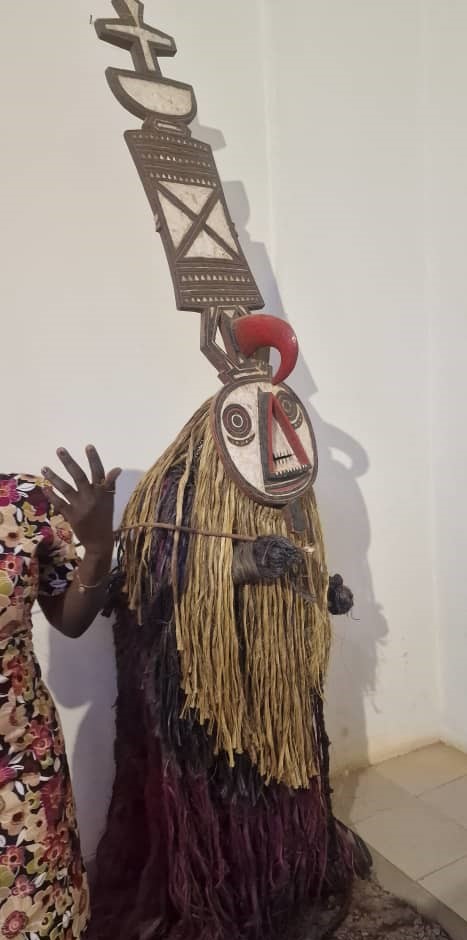

The particularity and aesthetic creation of masks show the culture and craftsmanship. The choice of colours, carving wood, and decoration items such as feathers or beads represent different cultural tastes. Communities can recognize the specific culture that carved the mask just by looking at it.
Today, with technological advances making information more fluid, the world of masks is more accessible. Younger generations no longer living in rural communities can still learn about these masks through museum exhibitions or online. The organization of mask festivals is also a new form of making knowledge about masks more accessible to the public. These masks, some not usually shown outside rural ceremonies, are now paraded in front of the world.
West African masks are an important part of culture and must be passed on from generation to generation. Spending an afternoon learning more about them plunged me into the zoomorphic world aimed at teaching and keeping tradition. It reminded me of the folktales and stories in my country that use a mixture of humans and animals to teach morals. I still have some of these stories memorized and hope to pass them down one day.
Deborah Melom Ndjerareou
 We Write Afrika
Leave a comment