The continent of Africa is a mosaic of cultures, languages, and traditional practices. In each of the 54 countries, there are a variety of tribes with distinct cultural traits that define them. In the growing globalization, African cultural practices can sometimes get lost within generations are conforming to an ever-evolving society. With various influences through technology, especially social media, the new generations are often drawn into foreign practices thus pushing back their African cultures. Within countries, the movement of the young populations from rural to urban areas also contributes to the diminishing hold of the ancestral ways.
On a recent trip to Gaborone, Botswana, I went on a cultural tour to learn more about the Tswana culture. Tswana is an ethnic group that lives mainly in Botswana and South Africa. Their language is Setswana, and they have a rich historical background and cultural practices that can be all over Southern Africa.
About 40 drive minutes away from Gaborone, the Bahurutshe Cultural Lodge is an initiative created to teach visitors and locals about the Tswana culture through demonstrations of traditions and the tasting of traditional food. This initiative is an example of how it is important to find ways to teach cultural practices to the world and keep traditions alive for the new generations in the country and the entire world.
Upon arrival in the village, we were welcomed by a dance and an official greeting from the village members and the Chief. The opening is coupled with a short historical background of the village and the Totem which is a Baboon. The totem is a representation of the village in the form of an animal that is revered by villagers. The totem is also a representation that embodies the traits of the village and is often an animal that is found in the natural surroundings. The official greetings to the visitors also include a greeting to the Totem and “offering” water to the ancestors by spilling some water on the ground. The Chief of the village then presented a monologue on the traditions of respect, marriage, the role of men and women in the community, and agricultural harvesting processes.
In explaining the traditions of marriage, the Chief explained how members of the community married within their tribe to keep their family name and wealth within the circle and how the marriage ceremony happened under the watchful eyes of older married women. To illustrate this, the visitors were invited to participate in a mock marriage ceremony accompanied by a narrative of the tradition. The illustration gave a clear picture of the marriage practices and particularities in the Tswana culture in Botswana.
Animal rearing is referred to as a “bank” in many African cultures. The number, the breed, and the health of animals portray the wealth and the standing of the owners in society. In Tswana culture, this “bank” is located about a 5-minute walk from the main houses and well-guarded. As part of the tour, visitors admired the wealth of cattle.
The members of the lodge also create crafts and souvenirs such as necklaces, bracelets baskets, paintings, and other handmade household utensils which are sold to visitors. These items are also symbolic of the local traditions and show the local talent in craftsmanship.
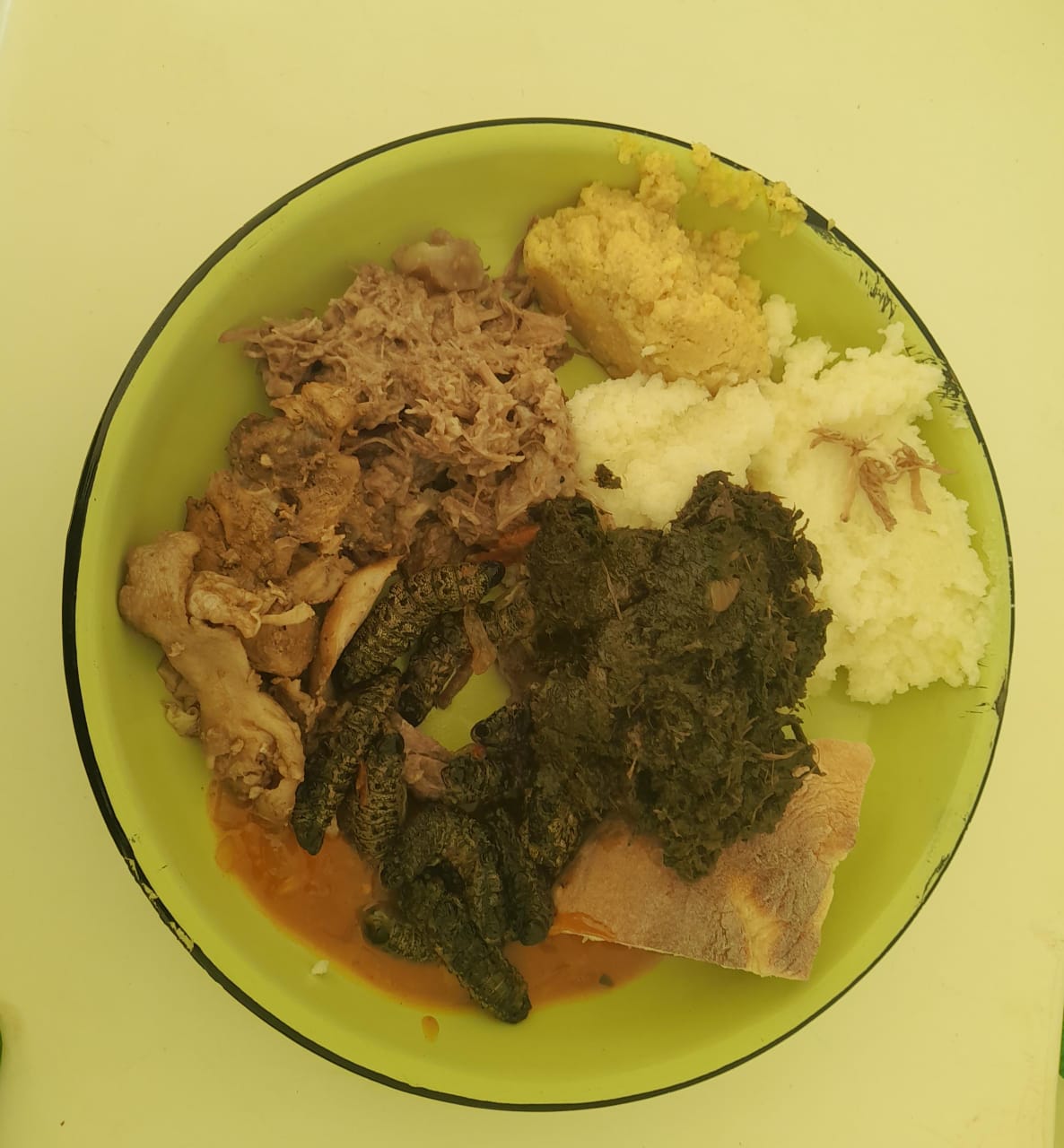
The cultural experience tour ended with the degustation of a local snack that consisted of boiled corn with a sprinkle of salt and other traditional dishes. There was fresh homemade bread baked, a dish of millet cooked in melon juice. The starchy taste of millet coupled with the sweetness of the melon created a unique lovely taste. For protein, there was goat meat, chicken, beef, and mopane worms. The meat was cooked with salt and an array of subtle spices. The mopane worms, a delicacy in many African countries, were sautéed with some onions and tomatoes. To accompany the meat and side dishes there was a sauté of green vegetables and the pap, the traditional hard porridge that is eaten all over the continent and known under different names depending on the region. The dishes presented illustrated the Tswana culture in all its forms through their traditional diet.
The experience at the Bahurutshe Cultural Lodge gave a glimpse into the ancestral ways of the Tswana and reminded us of the importance of drawing upon knowledge and inspiration from the roots. It is also a personal reminder of the richness of African culture and the similarities between all the tribes and ethnic groups in terms of our roots and ancestral ways.
As the African continent, through the current and future generations, races to compete in the globalization arena, staying grounded and close to the authentic culture is crucial. It is often said that you do not know where you are going if you do not know where you come from. We need to hold on to our culture as we define the new Africa we want. This initiative created to teach the cultural ways is to be lauded and preserved for many generations to come.
Deborah Melom Ndjerareou
 We Write Afrika
I often come back to read this piece. I love your take on my country❤️
You write so well! Feel free to come again. Goroga ka pula!
LikeLike
I am glad you enjoyed this piece. Botswana is truly a gem, I hope to visit again.
LikeLike