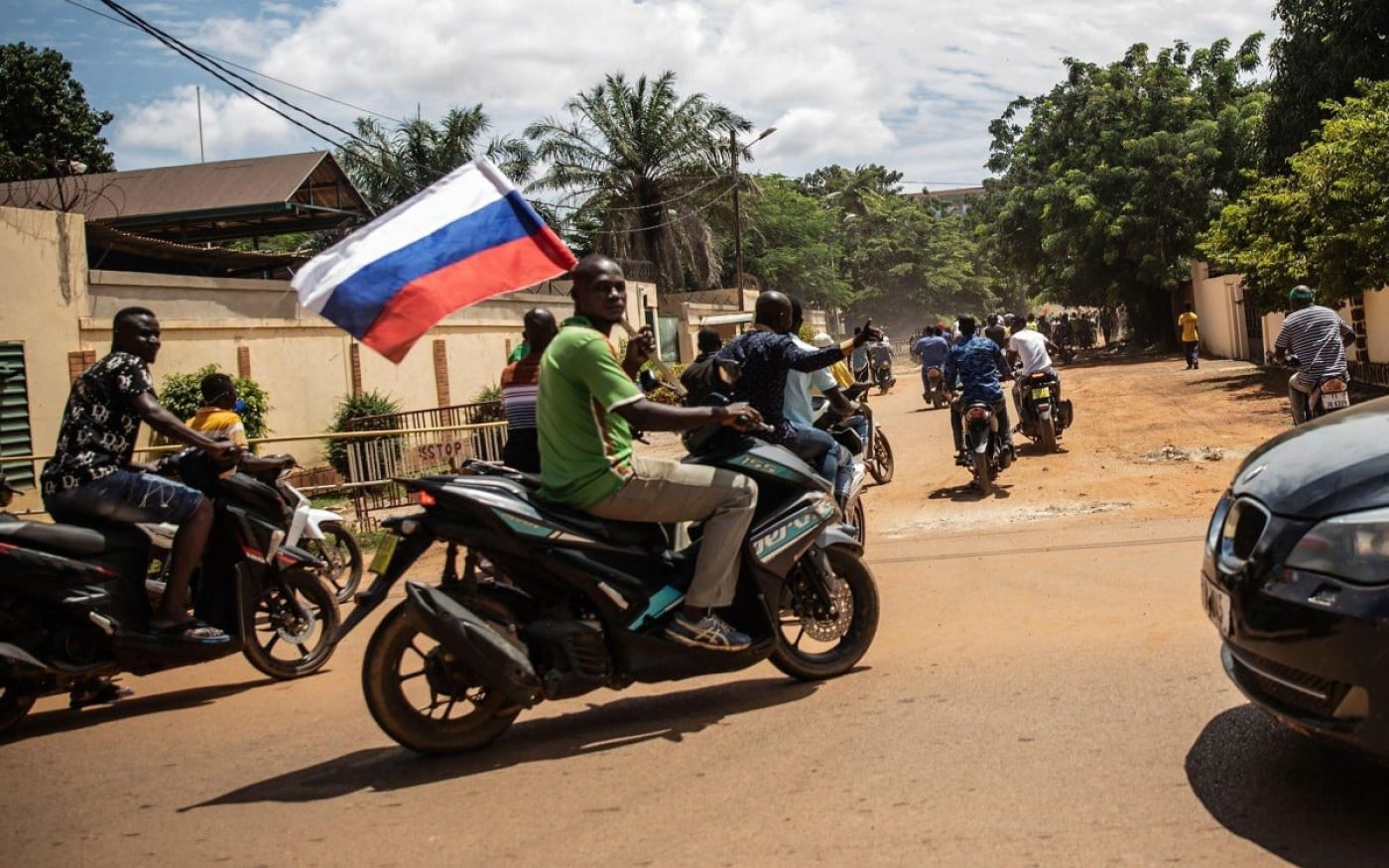
In 2021, when the Central African Republic (CAR) declared that Russian would be mandatory in universities, it was the beginning of an accentuated Ruso-African political and cultural ties in Central-West Africa. Russia had a strong presence in CAR in the last five years, providing military support in the fight against insurgencies. It has become their most trusted and influential ally. In the same wave of presence and influence, Russia has also reached other Sahelian countries such as Niger, Burkina Faso, Mali, and to a lesser extent Chad. Hearing about a new alliance with Russia or seeing the Russian flag in public areas has become common and accepted.
Focusing on cultural relations, Ruso-African relations date back to the Soviet Union (USSR) era in the 1950s. In the 1960s when countries were gaining their independence, it was an opportunity for the Soviets to extend their influence through educational scholarships. Thousands of students from all over the continent received education in different soviet parts studying in Russian. It is still common today to find people in the workforce who are fluent in Russian. Many are professors, medical doctors, engineers, architects, and businessmen. The academic programs offered focused on scientific and technological subjects to fight against imperialism according to the soviets. Students did not necessarily need to have completed high school to be accepted into Soviet schools. It was also a way to assert dominance over their global power rivals by gaining approval and alliance with the rest of the world. The programs for African students were tailored to their needs and were separated from classes offered to the Soviets.
Students received stipends and had more freedom and access to certain areas that were not open to the Soviets. On the other hand, studying in the Soviet Union came with a level of indoctrination through classes on the Soviet ways of thinking, doing, and their beliefs. Non-compliance or verbal opposition to these teachings warranted expulsion or other consequences. Being physiologically different from the rest of the population, African students faced discrimination and racism whether from malice or simple curiosity. In 1963, following the death of a student from Ghana, there were waves of protests in Moscow where students voiced their anger at the treatment they were receiving. Soviet media outlets were quiet about the events, however the media in other parts of the world.
In the current decade in the West Central African region, Russia is making a strong comeback perhaps taking advantage of the weakening relations with France the former colonizer. From groups such as Wagner on the ground to populations showing support to Russia by waving the latter’s flag, to countries voicing their desire for stronger Russian cooperation, it is undeniable that a new best ally is in the making. Countries claim that Russia seems to be a more equitable partner that has their best interests at heart. This remains to be seen. As the world powers’ influence shifts, gaining allies in Africa is on every agenda. With the disruption and near ending of French-Sahelian relations, could one believe that Russia would be that better partner? The link with France remains colonial and historical. Bother parties have a deep understanding and knowledge of each other. Russia on the other hand, although it had historical ties with the USSR, does not have a colonial relationship. The USSR supported the African countries’ desire for independence.
Time will tell the motives of Russian presence and desire to deepen relations with Africa as mentioned by Vladimir Putin himself. Would it be genuine ties that are mutually beneficial or is it a ploy to outdo countries such as France and the United States? Whether one or the other, it is crucial for the Sahelian population to fully benefit from any form of international cooperation and diplomatic ties. This is the responsibility of the leaders to first put the interest of their populations in any political, diplomatic, or financial agreement signed with the Russian counterparts. This will also only be apparent as time goes on.
Deborah Melom Ndjerareou
Photo credit: A Russian flag in the streets of Ouagadougou, Burkina Faso (via Associated Press / Alamy)
 We Write Afrika
Leave a comment