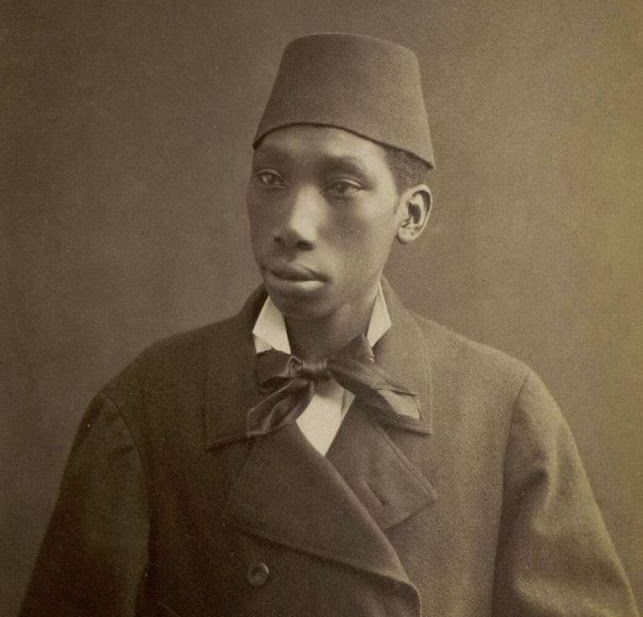
Who is one of the first black fighter pilots? The answer is Ahmet Ali Çelikten, an Afro-Turk who fought for the Ottoman Empire in World War I in 1914. This historical figure, which should have been more known in the world, opens a discussion box on who the Afro-Turks are and what is their space in modern-day Turkish society. Not enough is written about this community thus keeping their contributions to the world in the shadows.
In the 1800s, during the Ottoman Empire, the slave trade brought Africans from Kenya, Niger, Libya, and Ethiopia to what we know today as Turkey. Some slaves worked in fields and others at the service of prominent families. A notable aspect of slavery in the Ottoman Empire was that some slaves were posted in positions and given a level of political influence in Constantinople (present-day Istanbul). Several slaves were eunuchs and guards working in palaces and others held high rankings in Ottoman armed forces.
In 1924, the founder of the Turkish Republic Mustafa Kemal Atatürk established an act to provide equal citizens to all thus freeing all slaves brought from Africa. Throughout the empire and the Republic of Turkey, Afo-Turks have played a role in different fields such as education, politics, and entertainment. Much like Ahmet Ali Çelikten, other figures such as Zenci Musa were key figures in the Ottoman Special Forces during World War I. Both men remain a crucial part of Turkish history bringing pride to the Afro-Turk community. In entertainment culture, Safiye Ayla is a recognized name in Turkish classical music. An Afro-Turk born in Istanbul and partially raised in an orphanage; she became a music teacher and then rose to fame as a singer. She fused poetry and melody creating sounds that resounded with her Turkish audience for generations.
Today, the city of Izmir by the Aegean Sea is home to Afro-Turk communities where they still strive. since the establishment of modern-day Turkey, AfroTurks have relatively co-habited in peace with their fellow Turks although issues of discrimination are not excluded. Mustapha Olpak is an author and activist who traced his roots back to Kenya where his ancestors were taken. He wrote Kenya-Girit-İstanbul a book on his family saga, his life journey, and the loss of culture and identity of modern-day Afro-Turks. To bring more attention to this community and connect it back to their culture, Mustafa Olpak founded the Afro-Turk Foundation in 2006 in Izmir. The creation of the organization brought back the contributions of Afro-Turks into the limelight and pushed for more recognition from the Turkish government. His organization also collaborated with large organizations such as UNESCO creating more international knowledge in their community.
The organization also conducts activities that educate Afro-Turks on their origins, ancestral languages, culture, cuisines, and beliefs. It organizes annually Dana Bayrami (Calf Festival) a festival that originated in Africa and came with the slaves to the Ottoman Empire. Today the festival celebrates the lives of Afro-Turks, and their contributions to society and allows them to reconnect with their historical roots.
There is the argument that the increase in visibility of the Afro-Turk community in the past decades is related to the rise of Afro-related topics around the world and Turkey’s increased interest in the African continent. Ankara has been creating bilateral partnerships with African countries and creating educational, cultural, and business exchanges. For example, there are students from all over Africa who are scholarship recipients studying in Turkey. There is also a rise in Turkish citizens living in Africa and investing in different sectors. Various countries have Turko-National schools in their capital cities offering cross-national curriculums.
Increasing knowledge and visibility on the Afro-Turks is important for the increasing partnerships between the Republic of Turkey and African countries. Understanding the slavery history and Africans brought over to the Ottoman Empire is also part of African history that needs more African attention.
By Deborah M Ndjerareou
Photo credit: Pinterest
 We Write Afrika
wow what a great peak into history
LikeLike
Thank you, I am glad you liked it.
LikeLike