The Alliance of Sahel States
In a projected move, the Republic of Chad announced the end of its defense cooperation with France on November 28th this year. The announcement came right after the visit of French Minister’s visit to the Chadian Capital N’djamena. One of the subjects discussed during the visit was Haskanite, a recently launched operation against the extremist group Boko Haram led by Chadian President Mahamat Idriss Deby Into and the need to strengthen the relations between both countries. The following day, the Republic of Senegal announced that it was also ending its defense cooperation with France and aimed to close all French military bases in the country. Since coming into power in March 2024, President Bassirou Diomaye Faye reiterated the need to revisit the relations with France and create a new one based on mutual respect.
It is notable that in the same week, two Sahelian states cut military ties with their former colonizer who has kept a presence for over 65 years. These decisions, in geopolitical analysis, were anticipated following a wave of detachment from France in francophone Africa. Niger, Mali, and Burkina Faso are three Sahelian states who recently officially cut ties with their former colonizer by requesting the departure of French troops from their territory leading to a decline in the overall diplomatic ties with these countries. In Niger, the strained relations with France went as far as the departure of the French ambassador and the interdiction of entry for all French citizens.
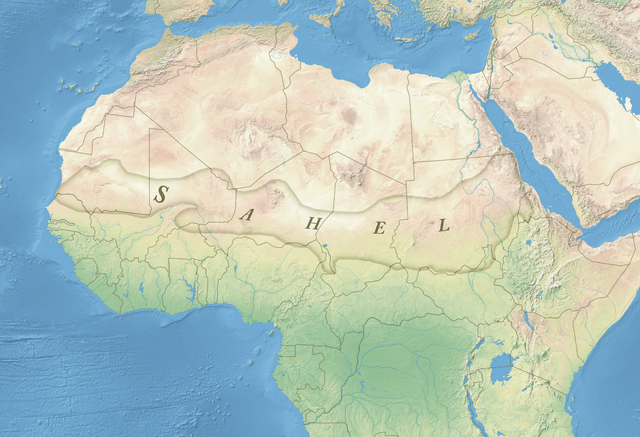
The trio (Niger, Mali, Burkina Faso) established the Alliance of Sahelian States (AES) in July 2024 a regional block aimed at furthering national integration and moving away from relations with France. The alliance exited the Economic Community of West African States (ECOWAS) stating that the latter is French-backed and destabilizing the region. Furthermore, the block has created integrated communication and immigration mechanisms and is in the process of creating its passport. The decisions of Chad and Senegal to sever military ties led to the belief that their diplomatic ties with France could also be strained.
When France departed from the countries forming the AES, Chad became their last remaining stronghold in the Central Africa region. Keeping their presence in Chad was an attempt to remain in the West and Central African regions, thus asserting their dominance. Paris stated their astonishment of Chad’s stance, especially after a visit from a high-level official. On the Chadian side, the president stated that Chad has matured, and the defense agreement no longer serves its purpose in the current states of affairs. In Senegal, during a televised interview, President Bassirou Diomaye Faye stated the time for a more equal partnership with France while emphasizing that Senegal is a sovereign nation that does not need foreign troops in its territory.
The question of national sovereignty is at the forefront of the reasons behind the diplomatic shifts with the nations in West and Central Africa. As a former colonizer, France kept a paternalistic hold of its former colonies and was considered to a certain extent considered a French pré-carré. Keeping French troops and military bases in the Sahel was not aligned with the sovereignty sought by the Sahelian states. The presence of France was to support national governments in the fight against jihadism. The lack of results in this fight was one of the reasons why the AES stated that France had no reason to remain in their territories.
The political and diplomatic shift is in line with the ascension of a new generation of leaders in most Sahelian countries. In Mali, Burkina Faso, Niger, Chad, and Senegal, all the current leaders are a new generation with a vision of renewed partnerships. When the AES was created and took steps to assert its stance vis-à-vis France, the question was raised whether other countries in the region would join forces with the new alliance.
AES members and the other Sahelian countries face the same recurring issues as such as political instability, youth unemployment, and the effects of climate change. When the AES broke away from ECOWAS, the other Sahelian nations have been watching them closely. If the new alliance is able to tackle these issues and better provide for its population, it could lead the other countries into the ideology of sovereignty without external interference.
AES has managed to gain the support of its population and has supporters in other countries in the region. Their stance on breaking all colonial ties with France resonates with other countries in the region, whose youth is also in the quest for change from the traditionally paternalistic relations. In the past five years, there have been anti-French protests in all the countries mentioned, and ousting France from the AES territory is the physical result of the protests. The AES, whether successful or not, could have the potential to spread its influence to other Sahelian countries. If the new block produces positive results in its fight against Jihadism without the support of foreign troops such as France, it could push others beyond Chad and Senegal to also follow suit. The Sahel’s geographical location in the continent is politically strategic and beneficial for various international actors. Therefore, reforms and changes of leadership in the region have implications for the whole world.
The agitation that took the Sahel region by storm is reminiscent of the Arab Spring that occurred in the Middle East and North Africa. In the Sahel, a new generation in the population and leadership is seeking to move away from the traditional Franco-African and redefine partnerships that are equally beneficial. The AES is establishing itself as the manifestation of that desire, leading to potentially joining the alliance making it stronger and influential. The AES based its creation on the principle of national sovereignty. It is the same ideology of sovereignty that led Chad and Senegal to end their military cooperation with France. Therefore, the alliance could be the beginning of the pathway leading to renewed relations where the Sahel is not seen as an inferior counterpart.
Deborah M Ndjerareou
 We Write Afrika