The arrival of Captain Ibrahim Traoré in power is reshaping Burkina Faso’s diplomacy and nationalism. The 36-year-old interim president represents a new generation of Africans with a new idea of where Africa should head. The West African nation has been experiencing turmoil for decades, and the new interim president is taking up an enormous challenge related to the political and socio-economic makeup of the country. Since taking power, Captain Traoré has implemented socio-cultural reforms, realigned political partnerships, and innovative measures to reshape the sense of nationalism.
Beyond political and socio-economic settings, socio-cultural reforms are worth noting. The relics of colonialism transcend through African culture, languages, beliefs, and norms. The process starts with the mind and behaviors to decolonize any nation fully. Colonial thought, food, clothing, and beliefs influence what a population thinks, eats, wears, and accepts as the norm.
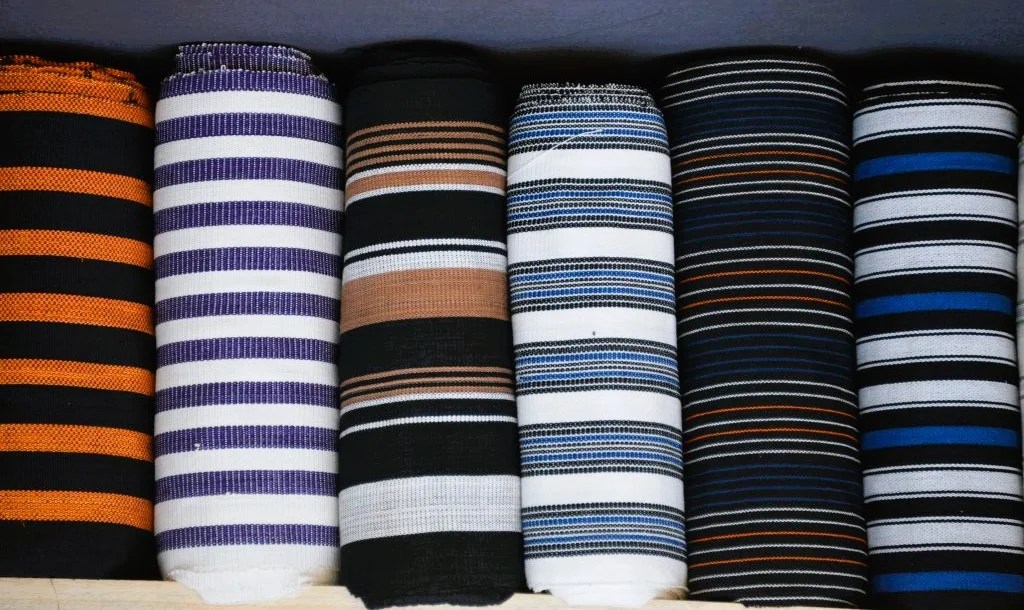
Burkina Faso, previously known as Haut Volta, was under French colonial rule until its independence in August 1960. Burkina Faso translates into People with Integrity by combining two main languages spoken in the country, Mooré and Dioula. This nation has a rich cultural heritage and is home to the Faso Dan Fani, a traditional hand-woven textile used across West Africa. The name translate into clothes woven in the country in Dioula.
The Faso Dan Fani is now at the center of cultural reforms as the interim president is introducing directives to use them as school uniforms, judicial wear, and the preferred attire for officials. This decision is part of cultural policies aimed at increasing the love of the land. In this globalization era, the Faso Dan Fani is being imported and sold worldwide, and it is crucial to recognize it as a West African cultural heritage.
In the francophone African judicial system, lawyers and judges wear identical gowns and sometimes wigs to those used in their former colonizers’ countries. Systems, texts, and laws are inherited from the colonial past and often not revised or contextualized into current realities. In courts, laws that are carbon copies of French law are used. School uniforms are also a colonial relic in public and private education, stemming from the styles used in the French education system. In schools, curriculums from the 1960s are still being used, and children memorize the long lists of the kings of France.
Introducing traditional clothing to replace colonial relics is a step towards decolonizing minds. Bringing people to understand the importance of cultural identity fosters acceptance of who they are and how to showcase national pride. One of the traits of formerly colonized societies is the belief that what comes from the colonizers is a preferred norm. This is a belief that takes generations to eradicate. In Burkina Faso, this step is the result of the eradication process. It is also an invitation that goes beyond the country to the whole continent to rethink how our identity should play a role in our institutions.
As subtle as it seems, educating a new generation through cultural identity will cascade into more reforms that will decolonize entire systems and national institutions. The road towards reclaiming identity and rooting systems in traditionalism will take time to reach its objectives. Using the Faso Dan Fani locally made is a stride towards reclaiming cultural identity and showcasing the pride of one’s country to the world.
The return to cultural identity is not new, as between 1983 and 1987, then-President Thomas Sankara, a pan-Africanist, and anti-imperialist, also had cultural reforms at the core of his policies. He declared, “Let us consume what we produce locally.” His short time in the presidential seat was a turning point from changing the country’s name to a call for a return to national roots. During his period, he recognized the Faso Dan Fani as a national cultural heritage, urging officials and the public to wear it. Increasing the production of the clothes also boosted the local economy and provided jobs for artisans. It also assured the continuation of the craft from generation to generation.
Burkina Faso joins many other African countries taking steps toward decolonization through subtle or loud reforms. These cultural moves from one country have the potential to cascade into other countries in the region and beyond. The process of decolonizing African metaphysics needs to be a continent-wide approach. The process has been underway, and it will take time to reach its goal.
President Traoré is thus bringing back an ideology from his predecessor and continuing the conscientization that started decades prior. Learning to love what is part of one’s culture is fundamental in shaping an identity void of colonial relics. The current generation can be a pivot to make future ones proud of who they are without inhibitions.
Deborah Melom Ndjerareou
 We Write Afrika
Leave a comment