The now-defunct G5 Sahel was a cooperation framework for development and security matters that united five countries across the Sahel namely Chad, Niger, Mali, Burkina Faso and Mauritania. The physical, social, and economic similarities of these countries drew their common approach in tackling security challenges and promoting the development of the Sahel region.
Beyond politics, the group’s inhabitants’ cultures are similar in customs and food. This article showcases five flagship dishes from each country that embody the gastronomy culture. Even though it is a distinct dish per country, all of them can be found in different varieties in all the other countries. If you travel in these Sahelian countries, look out for these dishes.
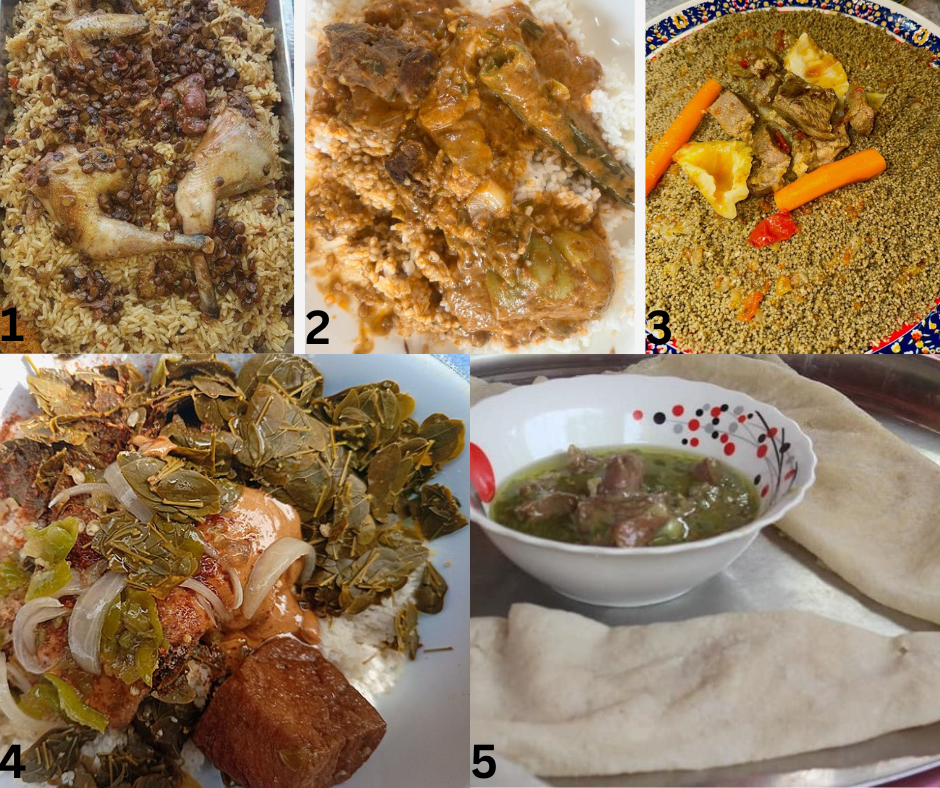
- Rice with Chicken and Soumbala -Burkina Faso
When you arrive in Ouagadougou, the poulet bicyclette (literally translated into the chicken bicycle) is the naturally reared chicken found in most eateries, flame-grilled or cooked in a sauce. In this dish, the chicken takes center stage with rice and the fermented seed of the African locust bean tree (Parkia biglobosa) locally called Soumbala. The grains of the tree are collected, boiled, and left to ferment before being dried and ready for use. It is a key condiment used as a spice and a flavor enhancer, and it is found in most Sahelian countries. The soumbala has a distinct taste that is reminiscent of grilled nuts.
To make the dish, rice is slowly cooked in a sauce with tomatoes, onions, spices, chicken, and the soumbala. It is then served on large plates, usually shared. It is one of the most common dishes that draws on Burkina’s tradition of spices such as the soumbala and the naturally reared chicken.
2 – Mafé (peanut butter sauce and rice) – Mali
Peanut butter is a common ingredient found in dishes across Africa. Mafé is one of those dishes that most highlights its role in African cuisine. The peanut butter used in the sauce is made from grilled peanuts, giving it a reddish color. Mafé is a sauce made with beef (or other types of meat), tomatoes, onions, spices, and a generous amount of peanut butter.
The meat is cooked in a sauce with the ingredients, and peanut butter is added later and left to slow-cook for a few minutes until the sauce becomes thick. Large pieces of vegetables such as carrots, white eggplant, and okra fingers are also added to the sauce. It is usually served on white rice but can also be eaten with Fufu. This hearty dish, eaten regularly, is also a key dish in festivities across West Africa.
3 – Ngommou (whole wheat couscous with meat) – Mauritania
From North Africa to the West and Central parts of the continent, couscous is a recognized ingredient. Couscous is also often associated with the culture of desert dwellers. Among Mauritania’s rich gastronomical diversity is Ngommou, a dish made from whole wheat large grain couscous served with a meat (beef or lamb) and vegetable sauce. It is essential to note the specificity of the type of couscous in this dish, which is different from semolina couscous.
Onions, tomatoes, bell peppers, garlic, cabbage, carrots, and spices (cumin, oregano, black pepper, salt, other oriental spices) are cooked with pieces of meat into a decadent sauce. Moisture is added to the couscous before it is cooked in a double-chamber food steamer. Once it is cooked, spices, thinly diced bell peppers and carrots are added to enhance its flavor. The sauce is then served over a bed of couscous with large cuts of carrots, cabbage, and the meat arranged on top. The eyes enjoy the meal before the hands dig in.
4 – Dambou (Rice couscous and moringa leaves) – Niger
Moringa is one of those miracles the world raves about. The tiny leaves of the tree is truly a star in the cuisine in Niger. Dambou is a household dish and a key part of street food. During lunchtime, it is common to see women selling Dambou surrounded by customers ready to enjoy it. The combination of boiled moringa leaves, meat, and rice couscous represents the country’s culture and environment.
Regular grain rice is taken to a mill to be broken into a semolina-like structure. The grains are then steamed in a double-chamber food steamer or cooked in water in a regular pot. In another pot, onions, bell peppers, meat, and garlic are sauteed in oil, water is added, and the mixture is left to cook until the meat is tender. The fresh moringa leaves are washed, added, and slow-cooked until tender. The moringa and meat are served over or mixed with the rice with powdered sesame seeds (optional) and pepper sauce. Raw onions and bell peppers are sometimes added to add a crunch and flavor.
5 – Kissar and Okra sauce -Chad
Okra sauce is found in various African forms and is usually eaten with fufu and sometimes rice. In Chad, it is customary to eat okra soup and meat with Kissar, an overly large flat pancake locally made that is part of Nilo-Arab tradition. Kissar is made from a batter of rice or corn flour mixed water and a local rising agent. The mixture is left to rest overnight before it is cooked on a large comal. The batter is thinly spread on the comal and cooked within seconds. The Kissar is then folded to form a round shape. It is sold in all markets where customers buy to accompany a variety sauces.
The okra that goes with it is made by frying onions, spices, and meat (beef or lamb) until golden brown. Water is added and left to cook until the meat is cooked. Okra fingers are diced into small pieces, then added to the sauce with a piece of natron to improve the draw of the okra. Fermented grains of locust beans are added for flavoring.
The okra sauce is served in a bowl in the middle of a large platter. The Kissar is meticulously arranged around the bowl. Yallah! Grab a piece of Kissar and dip it into the sauce, and the rest is a tasty journey.
Welcome to the Sahel, and as it is usually said, if it looks good, eat it!
Deborah M Ndjerareou
 We Write Afrika
Leave a comment