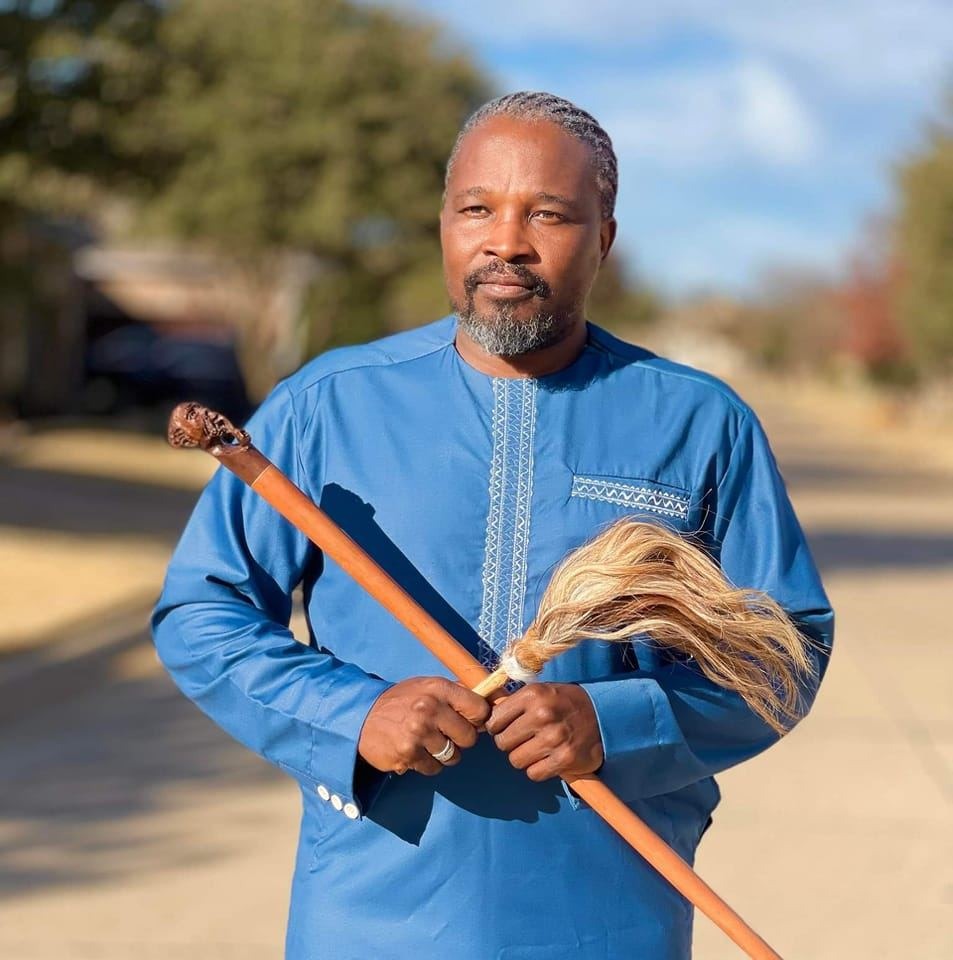
We are witnessing an increase in the wave to reshape the narrative from the African perspective. In this piece, I have a conversation with Reuben Ndjerareou, who as part of this wave, speaks and writes about the continent giving a perspective rooted in culture, realities, and history. We speak about his international background, his podcast series Speak African as well as his work with the African Think Tank, a US-based organization working with the African diaspora.
1-Tell us about your background and what you currently do.
My name is Reouhidi Reuben Ndjerareou, I was born in Chad (Central Africa). I left the country at 2 and moved to Burkina Faso (West Africa) when the civil war broke out and later moved to the United States at age 4 with my parents who relocated there to pursue their studies. I completed middle school in the state of Texas and high school between the US and Chad. I have a bachelor’s in political science and a master’s in Christian education ministries which I completed in a seminary. I worked in education, mentorship with youth and incarcerated people in the US for a couple of years. I then moved back to Chad where I worked in the oil and gas industry and later as head of an international school. I also worked in Zambia as a team lead for an education project embedded in the agriculture sector. I am currently based in Dallas Texas where I teach in middle and high schools in four school districts in the city. I also lead and take part in initiatives related to African culture and entrepreneurship. One of my initiatives is the Speak African web series and podcast.
2-What inspired the creation of the Speak African series?
When I teach in schools in Dallas, I often wear African clothes such as djalabia a traditional Chadian outfit, and introduce myself to my students with my full Chadian name. That often creates conversations as students have questions about my clothes and the spelling and pronunciation of my name. One day, during these conversations one student asked me if I spoke African. I explained that there was no language called African but there were thousands of languages in the African continent. But that question made me take a step back and think. I realized that I do speak African– meaning I understand the culture, the society, the beauty, and the challenges. This led to the idea of creating media content to speak about those aspects of Africa and tell stories around them. Now I share the content on my social media platforms and often have guests also share their stories and perspectives about the continent. I also use the content to make Africa more prominent to audiences and talk about its cultural attributes and how it contributes to the world. In Africa, we are a culture-based community. We give importance to hospitality, respect to elders, and community living among others, and sharing stories around those traits through our own experience is crucial for the world to see and understand.
3-What do you think is the space and image of Africa in the world?
In Africa, you find the goodness of human nature through hospitality. When telling African stories, it is important to highlight its achievements and the continent’s challenges. For so long the Western media has told African stories from their vantage point and trying to apply their norms to our reality. Today Africans need to tell their story through their lens. I believe that when we tell our story we need to give both sides. Talking about the progress, potential, and growth of the continent must also include the hardship, war, and corruption that cause harm and think about the solutions needed. The most important is that we tell it from the African perspective.
We also have the responsibility to talk about the unattended consequences of practices such as adopting Western norms in our countries that lead to harming parts of populations along the way. For example, we still have international organizations from the Western world caring for our local populations. This leads to the question of what are we doing for our own countries and communities. There needs to be a wake-up call leading us to invest in our people through organizations created locally. The Made in Africa for Africa approach. In addition, if we do want to measure our context with that of the Western world, we need to measure it through our perspective and norms. We have a lot to offer the world and it is time for Africans to make sure we have a seat at the global table and at the same time build our own tables.
4-Tell us more about the African Think Tank
The African Think Tank, created in 2023, is a community-focused initiative that creates platforms for Africans to collaborate and network and I serve as the Regional Director for the Dallas Texas area. The initiative brings together Africans and others through monthly events organized in major US cities. These range from speaking events to showcase events. Entrepreneurs, investors, and individuals come together and showcase their products, services, and goods. Individuals also have that platform to pitch ideas for partnerships and funding. During these events, Africans and other nationals have the opportunity to learn about each other and the continent. For example, during Black History Month in February, there were guests from the African American community who shared stories about their experience in the United States and learned more about Africa thus reinforming the links between the two communities.
One of the goals of the organization is also to foster the creation of initiatives and business ideas. During the events with focus groups, participants were grouped in different themes and each group continued to collaborate beyond the event to create a tangible result that can benefit the participants and other African nationals in their area.
As the movement grows, the organization is looking to branch out into the political scene by working with other institutions that can consult the African Think Tank on matters related to African experiences, the role of the continent in the global arena, or information on opportunities in Africa.
5- What next should we expect from you
I plan to grow the Speak African series and reach more audiences globally. I aim to continue the mission to highlight the positive role of Africa in the world. In doing so, I also have opportunities to grow the initiatives I started in Chad and Zambia in providing educational opportunities to grassroots communities.
In my work so far, I realize that there is a power dynamic in the non-profit world with international organizations working there and Africans are often at the losing end. Africans are in positions where they are afraid to speak up with their truth because the resources are coming from the West. My goal is to tackle this issue by providing capacity building to increase leadership in Africa and to give people the tools to speak up with no fear. We need to break this barrier of fear and push forth our African voices to advocate for our rights to demand what we deserve. We also need to empower local communities at the grassroots level and give them a voice to express their needs.
One of my favorite leaders is Steve Biko from South Africa. He says ‘It becomes more necessary to see the truth as it is if you realize that the only vehicle for change are these people who have lost their personality. The first step therefore is to make the black man come to himself; to pump back life into his empty shell; to infuse him with pride and dignity, to remind him of his complicity in the crime of allowing himself to be misused and therefore letting evil reign supreme in the country of his birth.’ I believe that Biko’s message still resonates today. Taking pride and dignity in who we are as Africans while also recognizing our challenges is key to our renaissance. In this light, I do my part in implementing this message.
You can follow Reouhidi Reuben Ndjerareou’s work on Facebook and Linkedin.


Excellent. Very good insights.
LikeLike
Loved this!
LikeLike