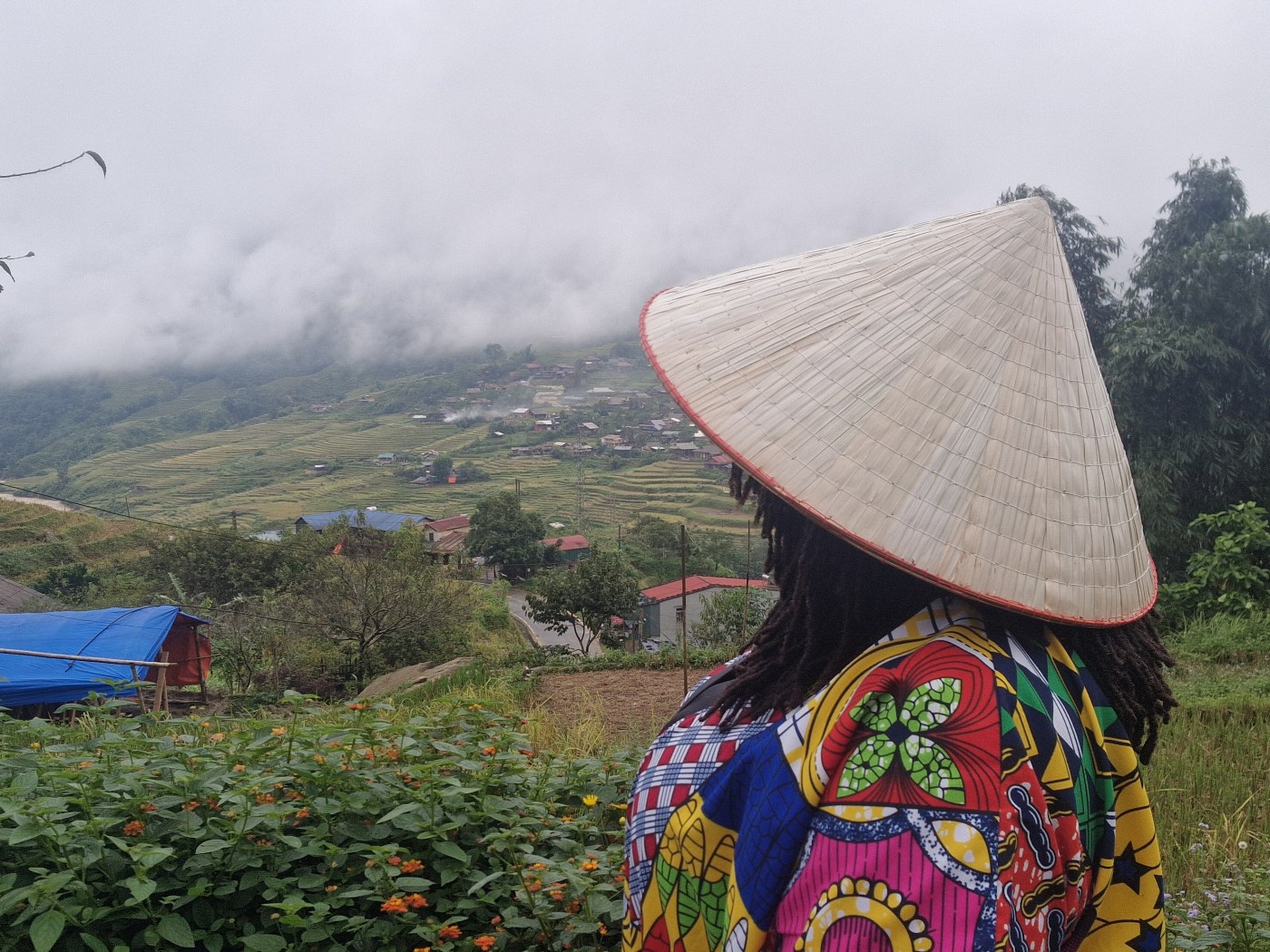
“There is no mountain higher than the knee of the Hmong people.” A saying from Vietnam
For my first visit to Vietnam, I wanted to escape hotel bookings (except in the capital) and the long list of tourist traps to spend more time within a community. I always believe that is the best way to experience a country. My research online led me to discover the increasingly popular concept of homestays among travelers and backpackers.
I decided to visit the town of Sapa in northern Vietnam and arranged a homestay in a Black Hmong village, approximately 10 km from the city center. The Black Hmong are a tribe found in Vietnam and Laos. They are part of the larger Hmong ethnic group across Southeast Asia and are known as Black Hmong due to their traditional black, indigo-dyed attire.
On my itinerary, I arrived in Hanoi from Bangkok on a rainy evening and had just enough time to drop my luggage before taking a walk around the old city. It was only a few weeks after the celebration of Vietnam’s 80th anniversary of independence from France, so the streets were filled with millions of tiny Vietnamese flags. The array of shops and street food vendors added a splash of red and yellow colors everywhere. Although it was pouring, the streets, food stalls, and bars were still crowded, and street vendors had an array of items to sell.
The next day, I visited the Ha Long Museum, the Museum of Ethnology, and the local night markets around the old city. The following morning, my journey to Sapa began early at 7 a.m., with a six-hour bus ride from Hanoi. One striking characteristic of Vietnam is its green-covered hills and mountains. The endless rice paddies and terraces are a sweet sight for the eyes throughout the journey. When my bus arrived in Sapa, the remnants of the French colonial period were visible. The architecture showed a mixture of traditional and French-style buildings. The houses form a mosaic of colors against the green hills, and the winding roads add to the town’s charm.
In Vietnam, tourism is a significant contributor to the local economy. Therefore, hospitality is well organized, and visitors (at least from my first impressions) are welcomed with open arms. The homestay owners I was going to communicate with me consistently in the weeks leading up to my trip, ensuring every detail was arranged and all the necessary bookings were made. Once in Sapa, my ride was ready to take me to Hau Thao village.
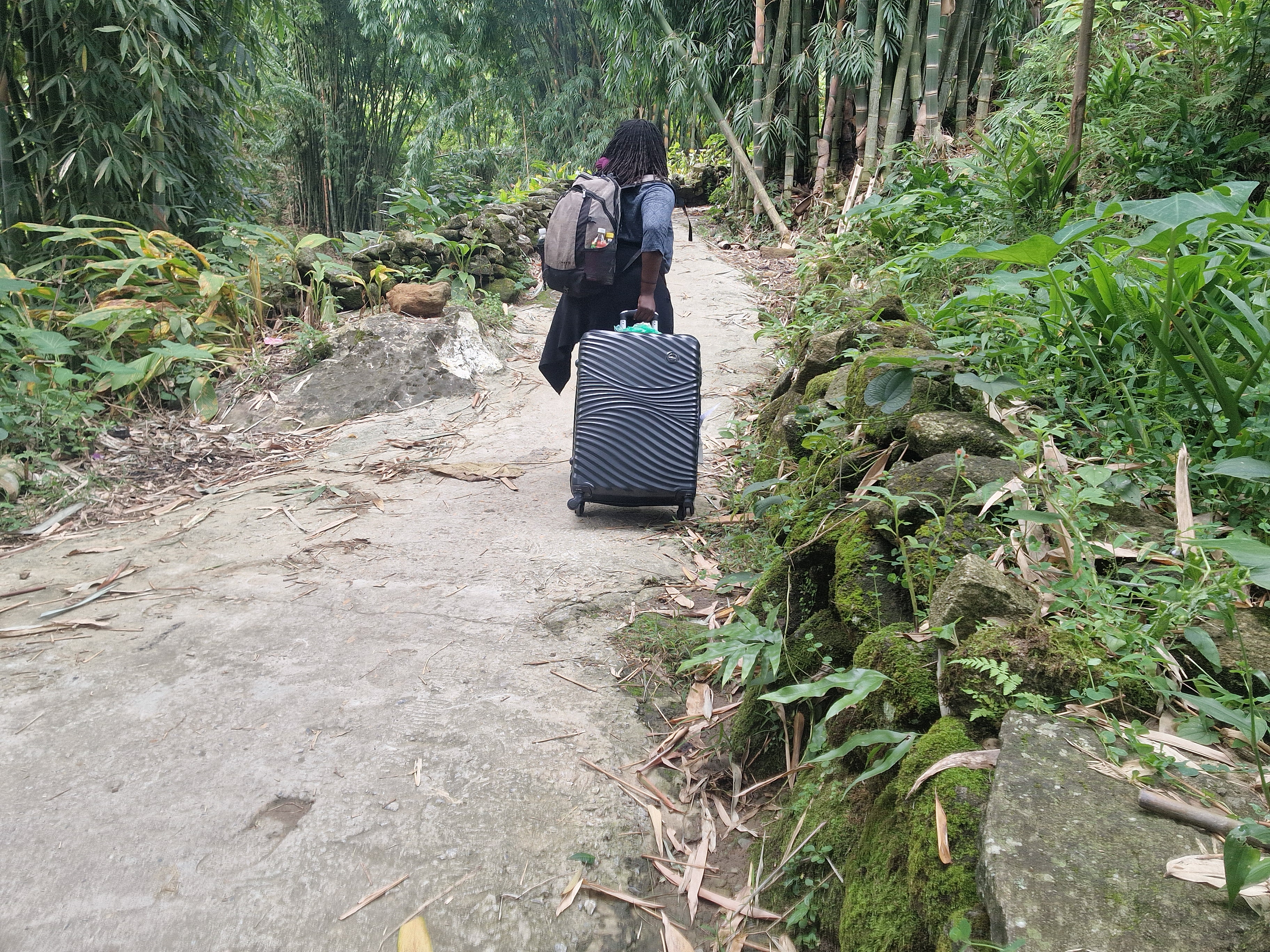
The drive took about 30 minutes, then the car stopped at the end of a hill where I saw the largest bamboo plants I had ever seen. Looking at the slope, I initially wondered if I could make it, but I took my 15kg suitcase and backed up, making it up the hill one step at a time. Each step I made slowly revealed the beauty around me, the sounds of a natural water stream. I reached the homestay at the top, out of breath, to one of the most breathtaking views, and was greeted by a large wooden house decorated with traditional Vietnamese crafts.
Heavy rains due to Typhoon Ragasa in late September resulted in nonstop rainfall for at least three days in Hau Thao. I had planned a five-hour hike around the village, through bamboo groves, and past rice paddies to another town, but had to cancel it due to the weather. That trek would have mirrored the daily walks villagers take to attend markets, work in the fields, and visit one another.
I then opted for handicraft activities and worked on wax drawing dyed in indigo, a craft that is part of Black Hmong traditions and cultural heritage. Sewing patterns onto cloth to create bracelets, scarves, dresses, and other decorative clothing items is also a traditional craft passed down through generations. With the help of my host lady and her young daughter, I made a bracelet. I am not quite skilled at sewing, but I managed thanks to their patience and guidance. I spent the rest of my time looking over the rice patties while completing the finishing touches on my upcoming short story collection. While high up in the hills, watching clouds pass so close by reignited my imagination, allowing me to craft even more stories.
A key feature of feeling at home in this type of stay is sharing meals. There was an option to order family meals, allowing guests to enjoy a variety of traditional dishes together. One night we had sticky rice, sautéed chicken and vegetables, spring rolls, and wild spinach.
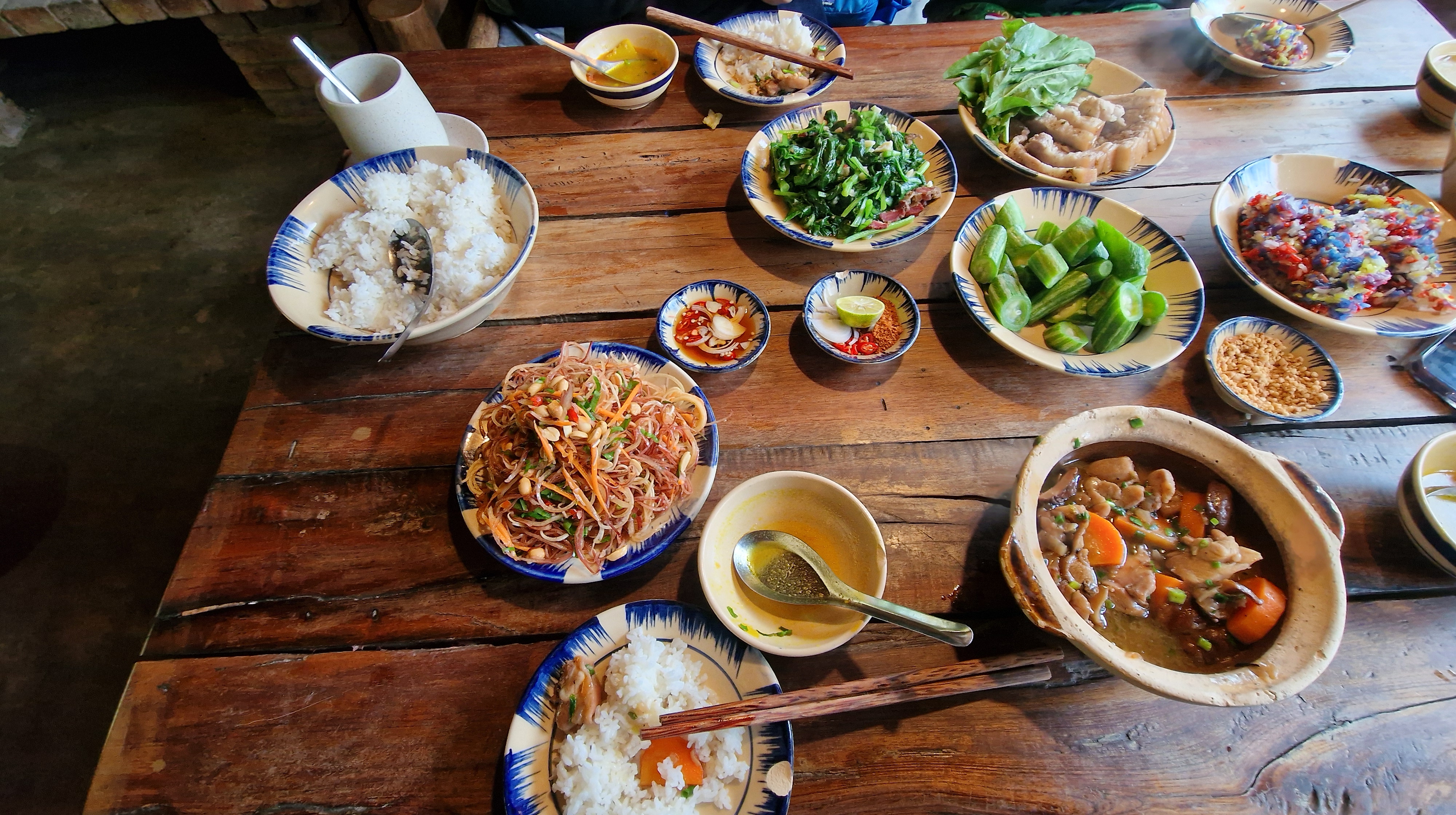
One afternoon, I took a 20-minute walk with two new friends to a traditional restaurant nestled on a hill in the village. Reaching it required a walk down a slope with views of rice paddies and a river below. The restaurant specialized in family-style servings of traditional Hmong dishes. From the array we ordered came banana flower salad, sticky rice, steamed pork belly, steamed bamboo shoots, squash soup, sautéed spinach, chicken and vegetable stew, multicolored rice, and ground peanuts as a garnish. The natural flavors, free from excessive spices, were indicative of recipes that have endured for hundreds of years. Enjoying these dishes while surrounded by lush green hills and misty clouds was an experience in itself.
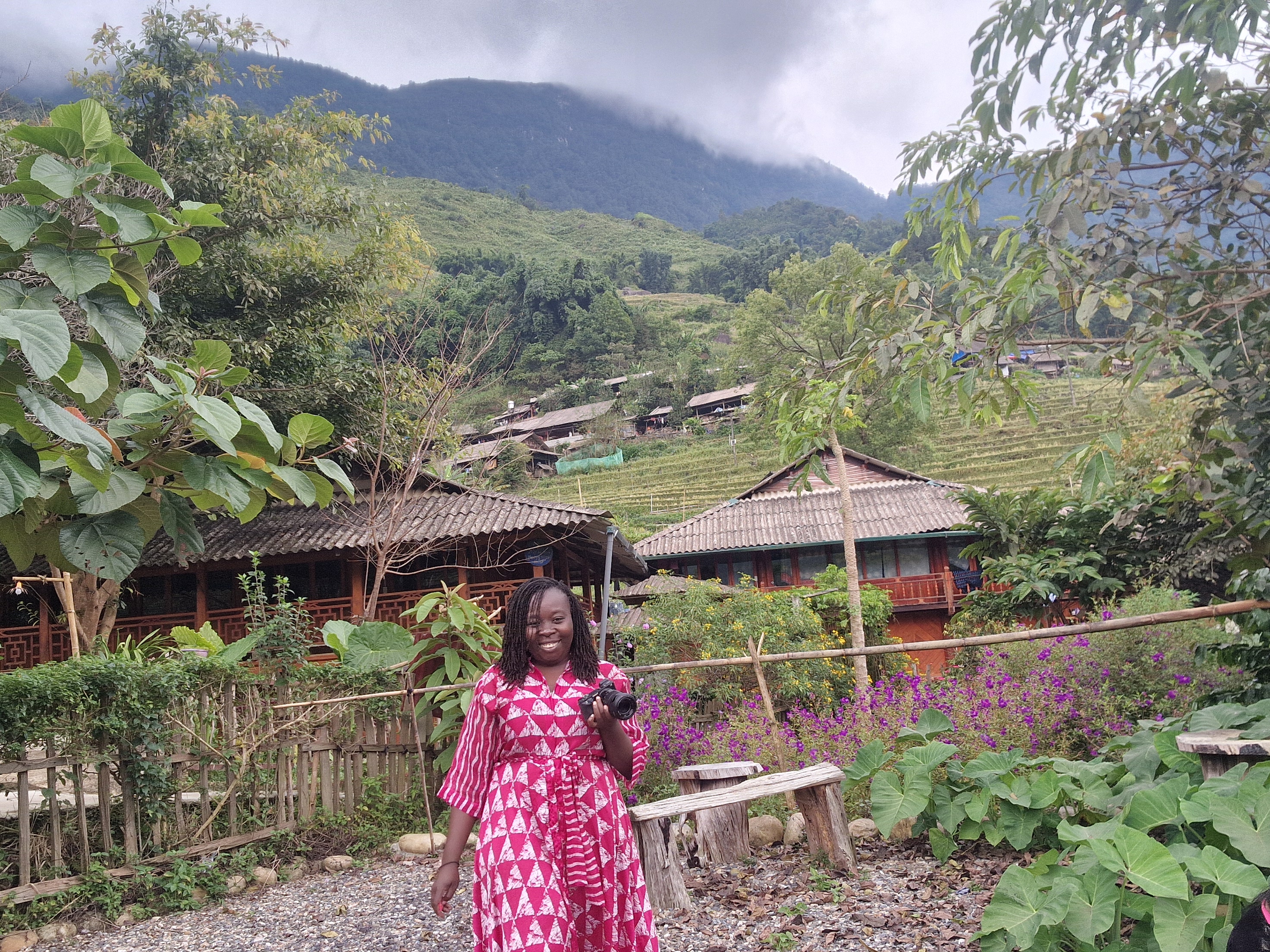

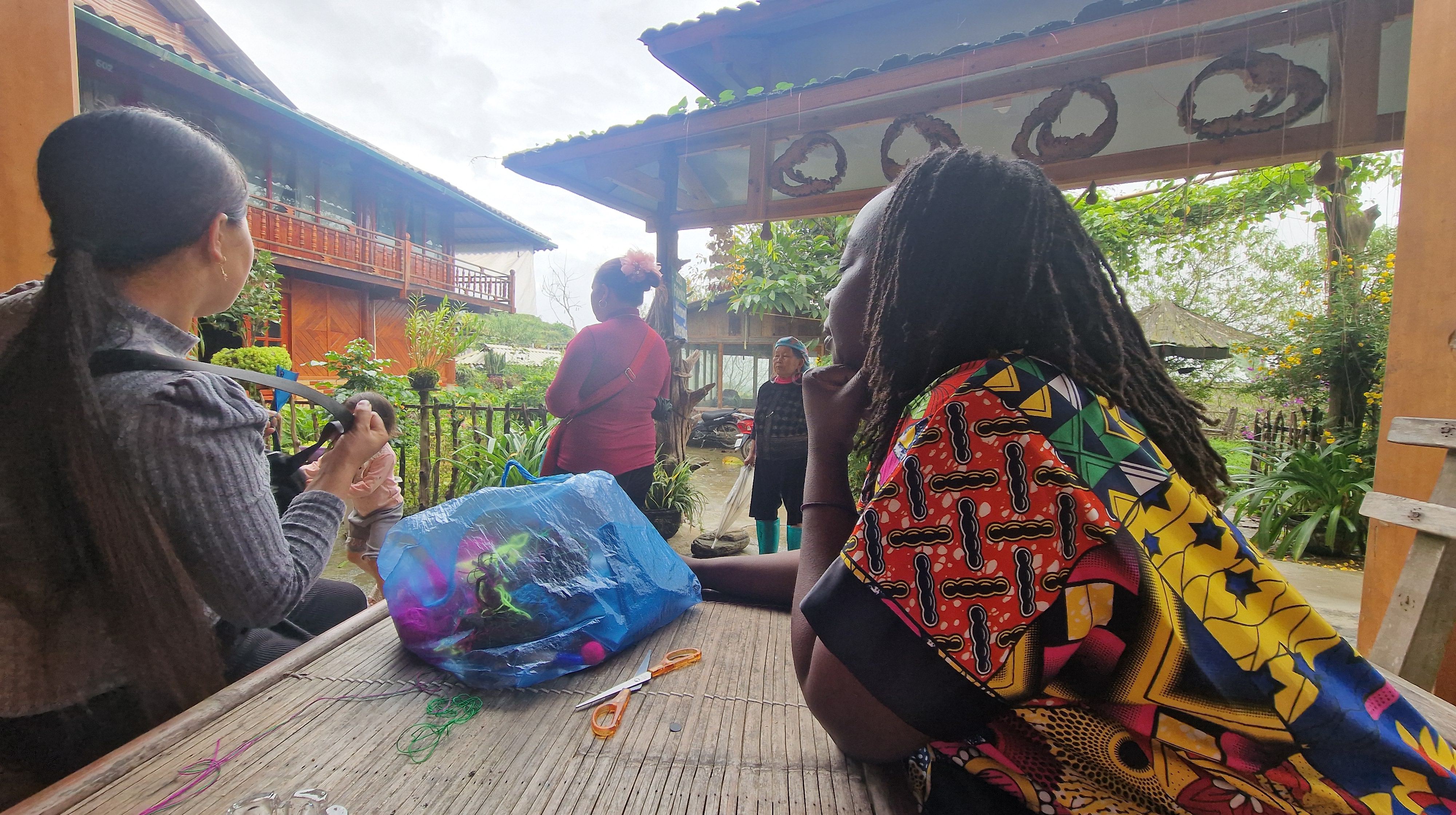
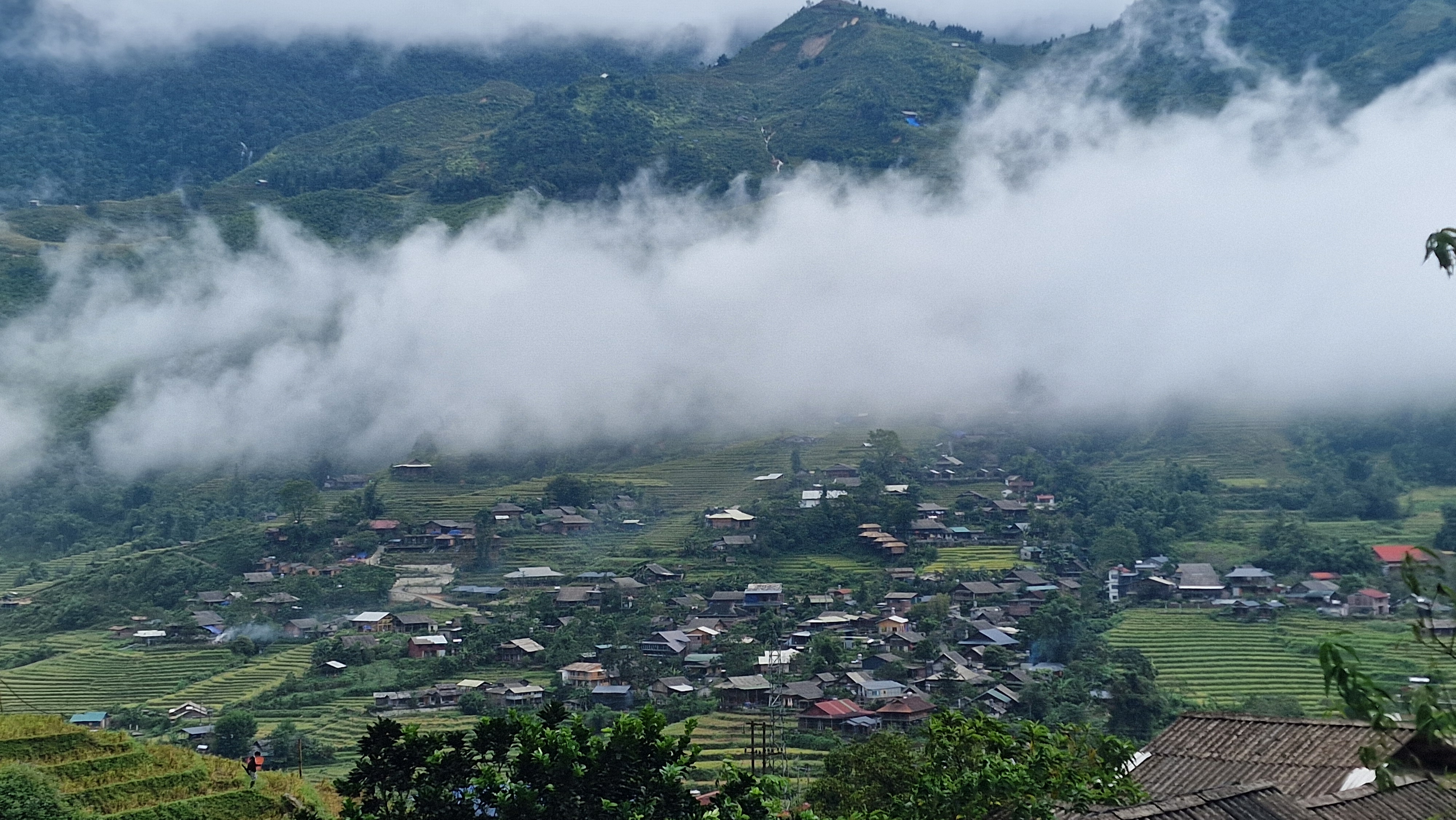
I left Hau Thao with the feeling that I would return one day. The peaceful atmosphere of a village high in the mountains and the immersion in a culture both foreign and family were deeply fulfilling. I spent hours taking photos, amazed by the surrounding nature. The lush green landscapes reminded me of places such as the DRC, Rwanda, and Madagascar. The traditional crafts, such as batik and indigo dyeing, evoked memories of Burkina Faso, Mali, and other parts of West Africa. The conversations on culture and history with my Hmong hosts provided the basis for further writing, with a focus on Afro and Southeast Asian cultural fusions.
In this world, we are more similar than we are different. Northern Vietnam is far from my country and Africa, but I felt a deep sense of familiarity while in Hau Thao.
Deborah M. Ndjerareou
 We Write Afrika
learned a lot. Seems like home. Did the bus break down or that was rhe 3nd of the road and the rest on foot ?
LikeLike
Thank you, I am glad you like the piece. The car couldn’t go further, so the rest had to be continued on foot.
LikeLike