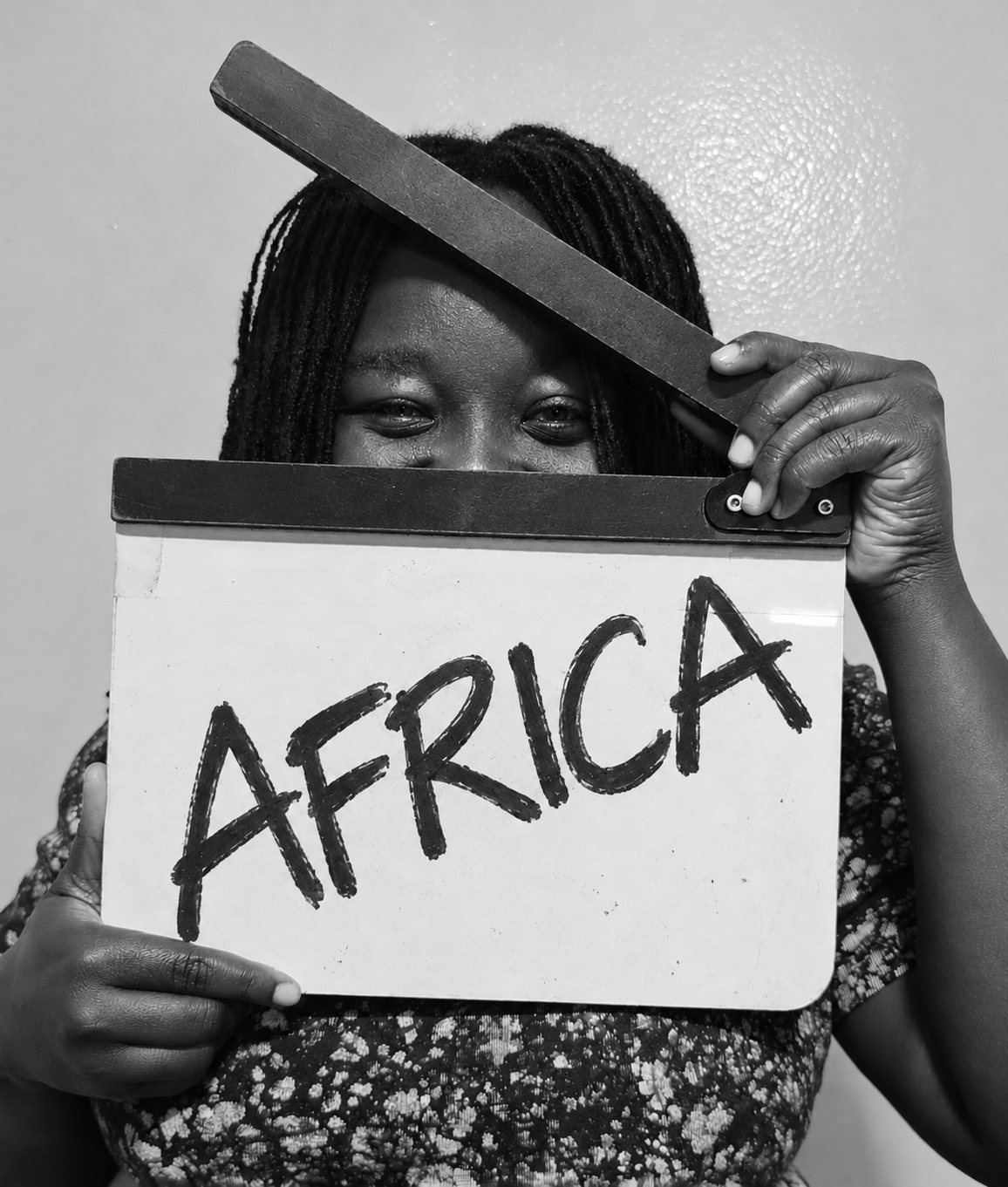
I usually got into trouble for spending too much time in front of the television instead of doing my homework. Whenever I sat down to study, I would sneak glances at the television when it was on. Interestingly, today, watching television has become part of my research. Since attending film school this year and participating in film festivals and industry events, I have found myself watching films and television differently. I now pay attention to dialogue, camera angles, locations, stunts, and even the names of producers, executive producers and screenwriters. I have gone from being a distracted child in front of the television to someone who watches with a notebook in mind.
I have always been a fan of African visual content and cinema. Growing up, I watched how African productions changed over the years, adapting to new audiences, technologies and ways of telling stories. Some productions were simple, others ambitious, but they all contributed to shaping how we saw ourselves and the world around us.
From childhood cartoons to African animation
Growing up in Chad, television followed a fairly predictable schedule. From Monday to Friday, 6 p.m. was when national television broadcasting began. There was usually an animated series, followed by other programmes and, eventually, the evening news.
Our television screens introduced us to international cartoons such as Teenage Mutant Ninja Turtles and School of Champions. Every now and then, we also encountered African productions, or at least programmes that introduced us to African characters and settings. One I remember is Kimboo.
Then came Kirikou and the Sorceress (1998), the animated film by Michel Ocelot inspired by West African folklore. It was a different kind of animation, one that drew from African traditions, storytelling and imagination. It was a reminder that African stories could also find their place in animation, a genre that many of us had grown up associating primarily with foreign productions.
Years later, in 2013, Aya of Yop City brought another dimension to African animation. Based on the comic book series by Ivorian writer Marguerite Abouet, the film tells the story of a young girl growing up in Yopougon, a neighbourhood of Abidjan, in the 1970s. It was a charming portrayal of everyday life, relationships, family and growing up. What I particularly liked about it was that it was not necessarily a story made exclusively for children. Adults could enjoy it just as much.
These productions demonstrated that African animation did not have to rely on folklore alone. It could also tell contemporary stories, explore everyday experiences and appeal to different generations.
The Nollywood years and the movies we grew up watching
Many of us were, and still are, familiar with Nollywood films. When I was growing up, most of the films we watched came on DVDs. They were usually two to three hours long and often came in several instalments: Part 1, Part 2, Part 3 and sometimes even Part 4.
These films had storylines that mirrored everyday life, often with the most elaborate scenes imaginable. A character making an omelette could easily become a lengthy sequence, with close-up shots of the eggs being cracked, the ingredients being mixed and the cooking process unfolding. Looking back, I sometimes wonder whether the directors were simply giving us time to appreciate the art of making an omelette.
Then there were the horror films, involving ghosts, spirits and supernatural appearances. The ghosts would suddenly appear on screen, accompanied by dramatic camera movements, shaking images and sound effects that, quite frankly, made them terrifying. We absolutely enjoyed these stories.
I also remember watching many of these films in English, without subtitles. Being Francophone, I did not always understand every word, but somehow we followed the stories. We interpreted conversations through the characters’ expressions, behaviour and reactions. And, of course, the commentary sessions with friends and family after the movie was often just as entertaining as the film itself. Everyone had an opinion about what had happened, who was right, who was wrong and what should have happened instead.
Some African films stayed with me and became favourites that I watched over and over again. Among them were Bal Poussière (1988) by Ivorian filmmaker Henri Duparc, Yaaba (1989) by Burkinabè filmmaker Idrissa Ouédraogo, and The Gods Must Be Crazy (1980) by South African filmmaker Jamie Uys. I must admit that, at the time, I had little understanding of the controversy surrounding the latter film and its portrayal of African people.
When African television felt like home
Beyond cinema, television series from across the continent were also shaping our viewing experiences. In West and Central Africa, productions such as Les Guignols d’Abidjan and Ma Famille, both from Côte d’Ivoire, became hugely popular. They were comedies, but what made them particularly enjoyable was how close they felt to everyday life. The characters, their family dynamics, their relationships and their occasional absurdities were familiar. It almost felt as though we were watching people from our own neighbourhoods.
From Burkina Faso came Les Bobodiouf, another comedy that became a staple across the region. Its humour and portrayal of sticky and comical situations made it particularly memorable.
From neighbouring Cameroon, I remember Japhet et Ginette, one of the early television series that introduced audiences to another style of African comedy. And then there was the unmistakable humour of Jean Miché Kankan, whose performances had a way of making ordinary situations hilarious.
Even today, I can still sit down and watch some of these old productions. Partly for the nostalgia, of course, but also because they remain genuinely entertaining. Yaaba and Bal Poussière were beautiful films in their own right, while Les Guignols d’Abidjan and Les Bobodiouf had a particular charm and humour that made them memorable.
Over the years, what has changed is the range of possibilities available to filmmakers. Technology, access to financing, production techniques and distribution channels have expanded, creating new opportunities to experiment with storytelling. Each generation has brought something of its own, and there is room to appreciate both what came before and what is emerging today.
Discovering another side of African television
During my university years in the 2010s, I started exploring South African television and cinema. This opened another window into the diversity of African storytelling.
Series such as Generations introduced me to a different approach to television production, with multiple storylines, interconnected characters and plots that developed over time. It was an interesting departure from the more straightforward storytelling I had become accustomed to.
South African cinema also introduced me to genres I had not necessarily associated with African filmmaking. One example was District 9 (2009), a science-fiction film directed by Neill Blomkamp and set in Johannesburg. Its story of an alien population living in segregated conditions was unlike anything I had previously encountered in African cinema.
It was particularly interesting to see an African city become the setting for a science-fiction narrative. Johannesburg was not simply a backdrop for a social drama or romantic story. It became part of an imaginative world that explored questions of power, discrimination and belonging.
Nollywood grows up, and African stories travel further
I remember watching an interview with Nigerian actress and filmmaker Genevieve Nnaji following the release of Lionheart, which became Netflix’s first Nigerian original film. One of the things discussed was the production budget. The figure mentioned seemed to surprise the interviewer, and perhaps many of us watching, because it challenged some of our assumptions about what it costs to produce a film of that scale in Africa.
It was another reminder that African filmmakers were increasingly finding ways to produce and distribute their work beyond traditional channels.
Over the years, visual storytelling has evolved, not only in terms of production techniques but also in the complexity of the stories being told. Nollywood films are no longer necessarily the lengthy, multi-part productions many of us grew up watching. There are shorter formats, more sophisticated cinematography and narratives that explore complicated characters and relationships.
In 2024, I watched The Black Book (2023) by director Editi Effiong, a film I remember and found myself completely absorbed by the plot twists and character performances, imagery and the societal issues weaved into the story. It was one of those films that kept me hooked until the very end.
South African productions have also continued to capture my attention. Kings of Joburg and How to Ruin Christmas are among my favourites. They demonstrate the range of stories African productions can tell, from crime and family dramas to comedy and contemporary relationships.
More recently, The Polygamist (2026) on Netflix became one of those productions that brought together African audiences and viewers beyond the continent. It also gave many of us a common subject of discussion, particularly when it came to certain characters we collectively found difficult to like. Jonasi, for instance, certainly generated reactions!
The series demonstrated just how far African productions have come in reaching international audiences. The performances, sound design and image quality were impressive, and the adaptation of Sue Nyathi’s book brought the story to life in a distinctly African way. What I found particularly interesting was how easily viewers could recognize aspects of themselves, their families or people they knew in one or more of the characters.
And perhaps that is one of the greatest strengths of African storytelling: its ability to make people feel seen.
Connecting the continent and the diaspora
Another interesting development in contemporary African cinema is the growing collaboration between African and African American actors, filmmakers and production companies. Productions such as Black Panther and The Woman King brought together talent and creative perspectives from different parts of the African diaspora.
These collaborations have opened additional opportunities for African representation on international screens, introducing audiences to African histories, aesthetics, cultures and characters.
The emergence of new production companies and creative movements is also worth watching. Initiatives such as Next Narrative Africa and companies such as EbonyLife Media are exploring ways to invest in African stories, develop new talent and strengthen connections between the continent and its diaspora.
There is something particularly exciting about this moment. African stories are no longer only being told for African audiences. They are increasingly travelling, finding new audiences and becoming part of global conversations about identity, culture, history and belonging.
There is still so much more to tell
African cinema has continuously evolved, and the journey is far from over. With emerging technologies, new production models and increasingly accessible distribution platforms, there is a growing ambition to compete on the international film stage.
But I sometimes wonder whether competition should be the main objective.
African cinema does not necessarily need to become a replica of Hollywood or any other established film industry to prove its worth. It can learn, collaborate, innovate and improve its technical standards while remaining firmly rooted in the cultures, experiences and perspectives that make its stories distinctive.
The truth is that African storytelling has always existed. Long before streaming platforms, international film festivals and production houses began paying attention, stories were being passed down through generations, performed in communities, told around family gatherings an brought to life through theatre, music and oral traditions.
What is changing today is the reach. Social media and international streaming platforms have made African productions more accessible, allowing stories from different parts of the continent to travel further than ever before.
Yet, there remains an enormous reservoir of stories waiting to be told. A continent with 54 countries, thousands of languages, diverse cultures, histories and lived experiences cannot possibly run out of material. There are stories about ordinary people, forgotten histories, extraordinary women, political transitions, love, conflict, humour, migration, identity and everything in between.
And I am particularly excited about the growing number of African filmmakers, writers, producers and other creatives who are taking their skills and experiences into the industry, contributing to a more diverse and authentic representation of the continent.
Perhaps this is what makes this moment so exciting. We are not simply watching African cinema evolve. We are also witnessing a new generation of storytellers take an active role in shaping what comes next.
For someone who once got into trouble for watching too much television, it is quite something to now find myself on the other side of the screen, learning how these stories are made and, hopefully, contributing a few of my own.
There is still so much more to come from African cinema. And I cannot wait to watch it unfold.
Deborah M Ndjerareou


Leave a Reply