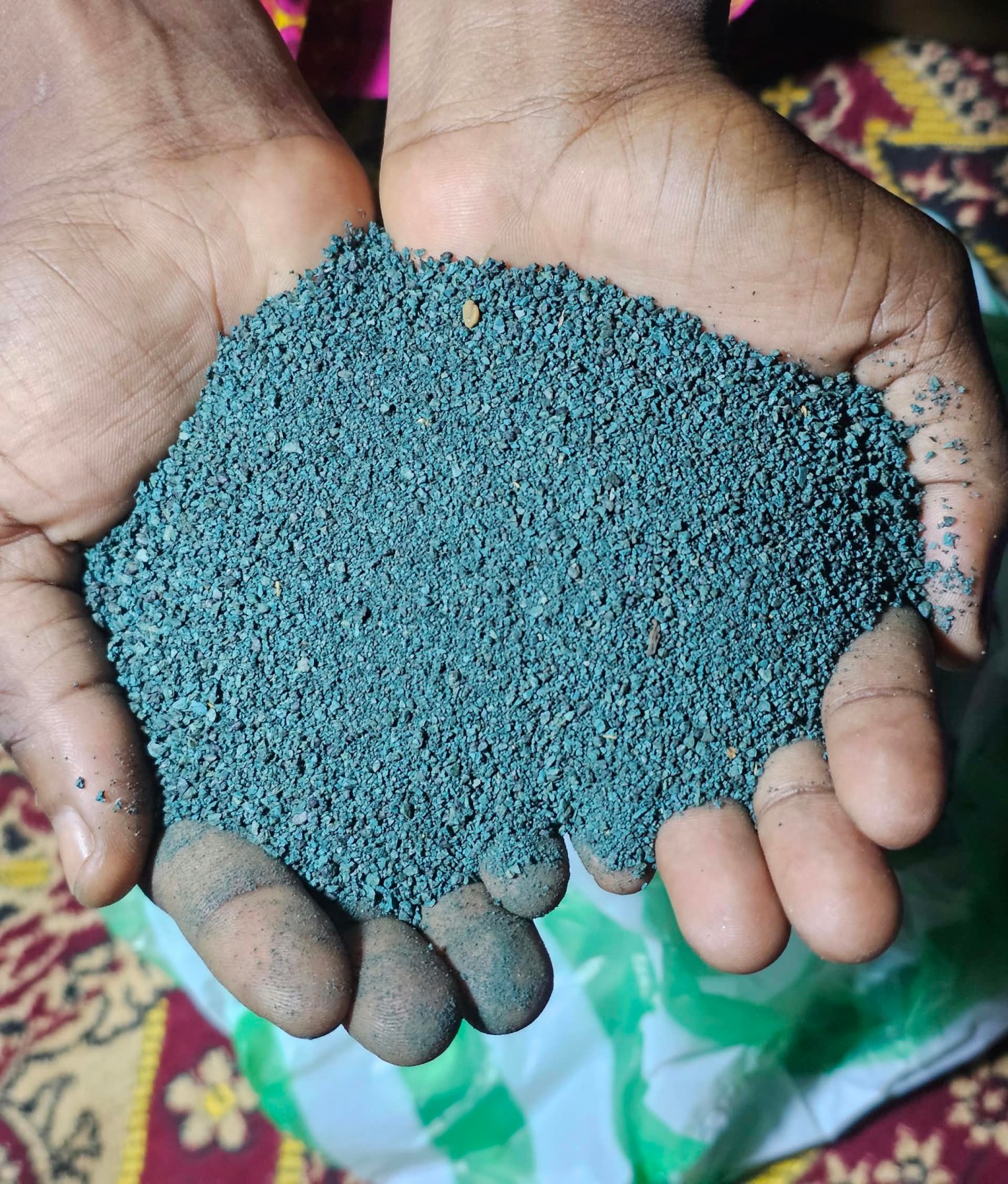
On a sunny afternoon in a village along the shores of Lake Chad, women wade through the shallow waters of natural ponds, carrying large basins. They carefully observe the surface, identify areas where a greenish substance has accumulated, and begin harvesting. Their movements are precise, familiar, and almost instinctive. They know these waters, their changing conditions and the seasons that are most favorable for harvesting. This knowledge, passed down from generation to generation, has been part of their daily lives for decades.
In local markets, this greenish-blue powder is displayed in basins alongside colorful spices and other locally produced goods. Known as dihé, spirulina (Spirulina platensis) is much more than a cooking ingredient. It is a source of food, a means of livelihood and an important part of the cultural heritage of communities across the Lake Chad Basin.
This microalga grows naturally in certain alkaline ponds rich in natron and has traditionally been harvested in the provinces of Lac and Kanem. Unlike many countries where spirulina is cultivated in artificial ponds, its production in Chad still largely relies on traditional harvesting practices and generations of knowledge about the natural environment.
Behind every basin of dihé lies a story of knowledge and transmission. Women who harvest it have learned to identify suitable ponds, recognize harvesting seasons and distinguish spirulina from other substances found in the water. After harvesting, the substance is filtered to remove impurities and then dried before being processed into powder or sold. These different stages rely on local techniques that have been refined over time.
Women are therefore the primary custodians of this traditional knowledge. Their relationship with dihé goes beyond its commercial value. It reflects an intimate understanding of their environment and their ability to make use of natural resources to meet their families’ needs.
In communities across Lac and Kanem, in northern and northeastern Chad, dihé holds a special place in local diets. It is commonly used to prepare traditional sauces, often combined with dried okra and smoked or fresh fish. Its distinctive flavor enriches local dishes while providing protein and micronutrients.
Spirulina is also widely recognized for its nutritional value. Depending on production and processing conditions, its protein content can account for between 50 and 60 per cent of its dry weight. It also contains iron, vitamin B12 and other micronutrients, making it an interesting food source for dietary diversification.
Beyond household kitchens, dihé is also used in nutritional initiatives. It can be added to certain food preparations, particularly porridge, to enhance their nutritional content. Some local initiatives and nutrition programmes have explored its potential as a dietary supplement, including in food preparations for people who are ill.
Dihé has also found its way into traditional cosmetics. Some women incorporate it into the production of soaps, body scrubs and shampoos. A hair mask made from dihé, eggs and shea butter is also used as a nourishing treatment to improve the elasticity and condition of natural, tightly coiled hair. These additional uses demonstrate women’s ability to explore new markets for a resource they have known and valued for generations.
Through harvesting, processing and selling dihé, women have developed an economic activity that contributes directly to their household incomes. For some, it is an essential source of livelihood. For others, it provides additional income that helps cover everyday expenses, children’s food, healthcare and education.
Nicknamed Green Gold, spirulina represents a genuine economic opportunity for communities across the Lake Chad Basin. Yet, despite its nutritional and commercial potential, production remains largely artisanal, while opportunities for large-scale processing are still limited.
Improving harvesting, drying, packaging and preservation techniques could enhance product quality and increase its commercial value. Developing small-scale processing facilities, providing access to appropriate equipment and strengthening marketing and distribution channels could also create new opportunities for women producers.
In the longer term, a better organized value chain could open up markets beyond local communities, creating opportunities for national and potentially international trade, provided that the necessary health, safety and quality standards are met.
Over the past decade, various organizations and development initiatives have taken an interest in promoting the value of spirulina in Chad, particularly through support to women producers and capacity-building activities. These efforts reflect growing recognition of the resource’s potential and of the role women play in its production.
However, industrialization should not mean erasing the knowledge that made this activity possible in the first place. Developing the value chain must begin with recognizing women as custodians of traditional knowledge, producers and decisionmakers in shaping its future.
This traditional economy remains closely dependent on the natural conditions of the ponds. Any changes to their environment can affect the availability of the resource, harvesting seasons and production conditions.
Across the Lake Chad Basin, environmental transformations extend far beyond the visible changes to the landscape. They also affect the economic activities of thousands of people, particularly women whose livelihoods depend on natural resources.
Climate change is therefore an economic reality as much as an environmental one. Its effects are reflected in the working conditions of women producers, the daily expenses of traders and the resources available to households.
This vulnerability also affects women whose livelihoods depend on fishing and the fish trade. When access to fishing areas changes, the consequences are felt throughout the entire commercial chain. Sourcing fish can become more difficult, transportation more expensive and storage increasingly challenging. Losses increase while profit margins shrink.
These difficulties are particularly significant because many of the women involved have limited financial and material resources. Access to credit, processing equipment, storage facilities and markets is already a challenge. Environmental disruptions further deepen existing economic inequalities.
For households that depend on these activities, declining incomes can force difficult choices. Some expenses must be postponed, while others have to be reduced. Food, healthcare and children’s education may all be affected.
The climate crisis then enters households through a less visible pathway: the gradual erosion of livelihoods. Yet women across the Lake Chad Basin are not simply victims of environmental change. They are also holders of knowledge and potential drivers of solutions. Their understanding of natural resources, experience in processing local products and ability to diversify their activities are valuable assets in helping communities adapt.
In the dihé value chain, improved processing and packaging methods could enhance product quality and commercial value. In the fishing sector, better preservation facilities and techniques could reduce post-harvest losses and help protect the incomes of women traders.
However, these opportunities require more than occasional technical support. They call for investment in infrastructure, access to finance, training, producer organization and new markets. Above all, they require women to have a meaningful role in decisions concerning the resources on which their future depends.
The Lake Chad Basin therefore tells a story that goes beyond environmental transformation. It is also the story of women whose work, ancestral knowledge and economic activities are deeply connected to an ecosystem undergoing profound change.
Dihé, the greenish-blue powder found in local kitchens and markets, carries within it a history of knowledge, resilience and ingenuity. It reflects an enduring relationship between women and their environment, as well as an economic potential that remains largely untapped.
Preserving this resource, valuing the knowledge surrounding it and supporting the women who produce it also means recognizing that some of tomorrow’s solutions may lie in the knowledge inherited from yesterday.
Because behind this Green Gold lies much more than an alga: there are generations of women, a living cultural heritage and the possibility of building new economic opportunities for communities across the Lake Chad Basin.
Cynthia Djihida and Deborah Ndjerareou
Photo credit: Cynthia Djihida


Leave a Reply